During my five years on stage I had to improvise.
Pretty often actually and most of the audience did not notice it.
I had to improvise when someone forgot their lines.
When an accessory, key to the plot, was still backstage instead of its designated place.
During technical malfunctions (these happen A LOT).
The audience doesn’t notice if you know how to improvise.
Improvisation is easy when you are grounded and know your role and character.
Improvising is easy if you are knowledgeable.
During my years as an University student, all presentations and lectures given were improvised.
I had few notes which I projected on screen and simply told my peers and (fellow) students about the subject. Hardly giving my notes or the presentation a glance.
More often than not, the presentations merely acted as a red line to loosely follow.
A presentation done by me is more of the “listening”-kind than the “showing”- kind.
It wasn’t rare to see me skipping a few dia’s in the powerpoint as the presentation went on.
In my professional life as a technical advisor, when giving lectures and presentations, I rarely turn on a computer screen.
I talk, show and explain through hand-made sketches and “hands-on” approach by showing the actual products and their ins and outs.
When working for a whole seller in heating and renewables I was even considered the most knowledgeable (and best salesman) in the entire company… before I left and went working elsewhere.
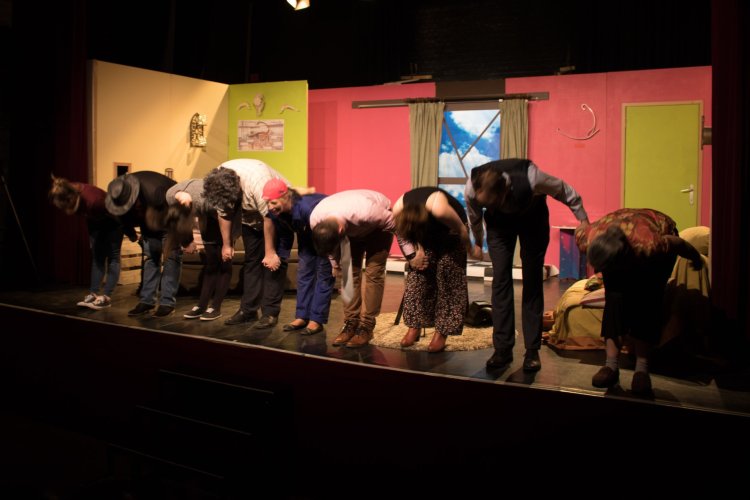
On stage, and during rehearsals, we improvise A LOT.
Not forced by our director but of our own volatility.
Mostly as pulling jokes during rehearsals.
The reason? It creates a light-hearted atmosphere but also stimulates the mind to be creative.
To be able to continue the play without interruption but also to train ourselves if anything happened out of the blue.
There’s a few instances which I remember fondly where decent improvisation actually enriched the play due to exquisite execution.
The first happened to a dear friend of mine on stage.
He was playing an old professor in the play who was unhappy with his marriage and wanted to divorce his wife.
The character of the woman playing “his wife” was that of a modern artist of some renown, also wanting a divorce and trying to achieve it through a scheme.
We get to the part both have an argument on stage and it was time for her to walk of.
Except, due to stress, she forgot to do so and was convinced there were still a few lines to be said.
Our prompters remained silent as there was nothing they could do and made gestures she should get off (which she couldn’t see due to them being very well hidden from the public… us actors only need to hear their “commands” if we forgot something).
My friend, knowing what was happening, improvised in order to get the play back on track while remaining in his “character” on stage.
In order to correct the mistake he improvised a few lines while dropping the hint it was her time to get off stage.
She didn’t get it.
Staying true in character, he improvised and in theme of “spousal disagreement” started pushing her to the exit of the stage.
She came back a few times before our director pulled her back and explained the mistake she made while the rest of us busted out laughing from the hilarity of the situation.
It was an improvisation of but a few minutes but the public didn’t notice anything (except for the few who also saw the performance on our second day).
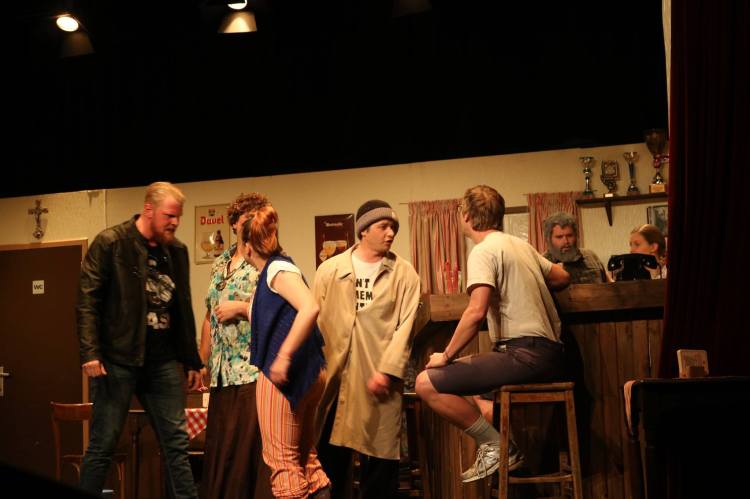
Another example happened to myself in the 3rd year I played with the group.
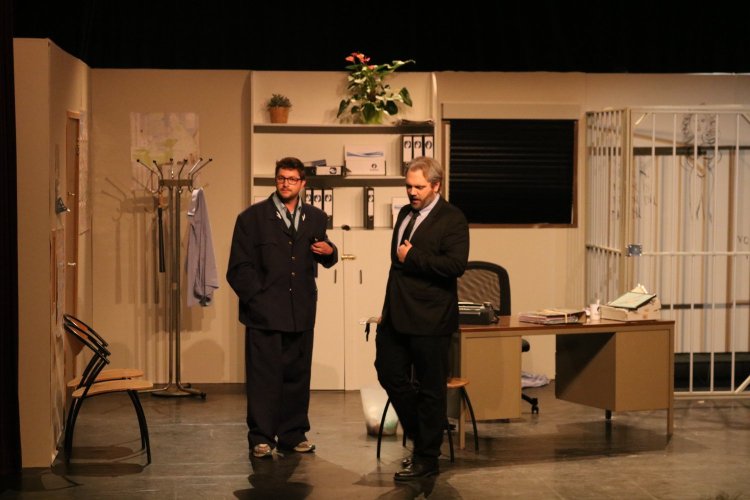
I played the role of a sheriff. A stern and strict man whose job it is to interview a criminal (serial bank robber) and bring him to justice. The plot here is the criminal having escaped and being replaced by the mother (with whom I fall in love with) of a nerdy officer who was put in charge by his carefree superior who was having an extramarital affair.
In this scene “the nerdy officer” is commanded by me to hand over the keys to the cell of the criminal and leave the office as I commence my “interview”.
The keys here are a major part of the scene.
Small problem occurs… the keys were “somewhere” backstage and not where they should be.
As I see him searching his pockets and turning a bit whiter by the realization I draw him in by commanding him to search his desk “probably left them there somewhere”.
As, naturally, the keys aren’t present on stage I improvise a few lines and “command” him to look in the archives (an exit from front-stage) to look for the props.
Now… while this prop was being searched for back stage (which took quite some time) THE PLAY HAD TO GO ON.
For the following fifteen minutes EVERYTHING on stage was improvised and in tune with the plot.
The beginnings of the supposed “interview”, all actions and words said during those fifteen minutes were all non-scripted.
I did this while keeping an eye out for the other guy to return so we could finally move back to familiar territory (with slight adjustments).
Understand these situations well.
For the audience its seconds passing by and they actually feel like seconds.
To the performers on stage, when a fuck-up occurs, seconds feel like hours as adrenaline and anxiety take a hold.
The fifteen minutes I improvised. The minutes my friend had to improvise FELT LIKE HOURS.
It was only by being creative and knowing our roles and characters well that we managed to pull off these feats.
In all honesty, we both vented once offstage to release the tension.
It doesn’t matter how well you pulled it off, the anxiety and stress is suppressed during these moments.
It doesn’t matter if you stay true to the script or your character.
It doesn’t matter if you break fourth wall.
There’s going to be a lot of stress involved EVEN if you have a “fuck-it” attitude.
In the year after my fifteen minutes of improvisation it was decided for the entire group (and associates) to organise a non-obligatory improvisation session.
Me, my friend and another guy nailed this to the extend the lecturer started questioning why the three of us were present (because we like it and like to fuck it up on purpose once in a while).
I highly advise ANYONE, no matter your career, to organise or take part of an improvisation session.
It’s a skill not limited to artists but also has its purpose in professional settings (sales, management, education,…).
And its great (almost childish) fun once you get the hang of it.
 Bit-Block.org
Leave a comment