
There are multiple ways to store your precious cryptocurrencies.
The most renowned method is by keeping them in an online wallet on the exchange where they were bought. This move, however, is quite unsafe. As many within the Cryptocommunity can tell:
“You do not own your coins on an exchange”.
The reason to this is exchanges keeping their own private ledger.
The wallets present on an exchange, and ties to your profile, are designations.
They are entries in their personal logbook which indicate how much, and which coins, are being designated to you from the central reserve held.
Should the exchange fail or go under will your coins be gone.
The safest option is to keep them off the exchange platform when not trading.
They can be stored on a private wallet on your computer (digital wallet) or in offline wallets.
Among the offline wallets are a variety of choices. These range from software wallets kept on a USB- or memory stick to hardware wallets with different functions.
BY FAR are hardware wallets the most renowned and safest to keep your coins in.
Renowned hardware wallets are:
– Trezor Hardware wallet
– Ledger Nano Hardware wallet
– BitBox Hardware wallet (from ShiftCrypto).
– …
All of them have their built-in securities and options in order to protect your coins.
There are price-cards attached to them which, for the early beginners with small budgets, can be a bit of an investment. Prices can easily go within the range of mid-hundred depending on the model and options chosen.
Introducing SATOCHIP.

SATOCHIP is a hardware wallet made in Belgium.
It prides itself for its high security, sleek design(s) and above all: high affordability.
Whereas with the above mentioned hardware wallets have varying prices and their basic models costing below the hundred EURO’s, these basic models do not offer as much capabilities as the SATOCHIP does and are even somewhat limited.
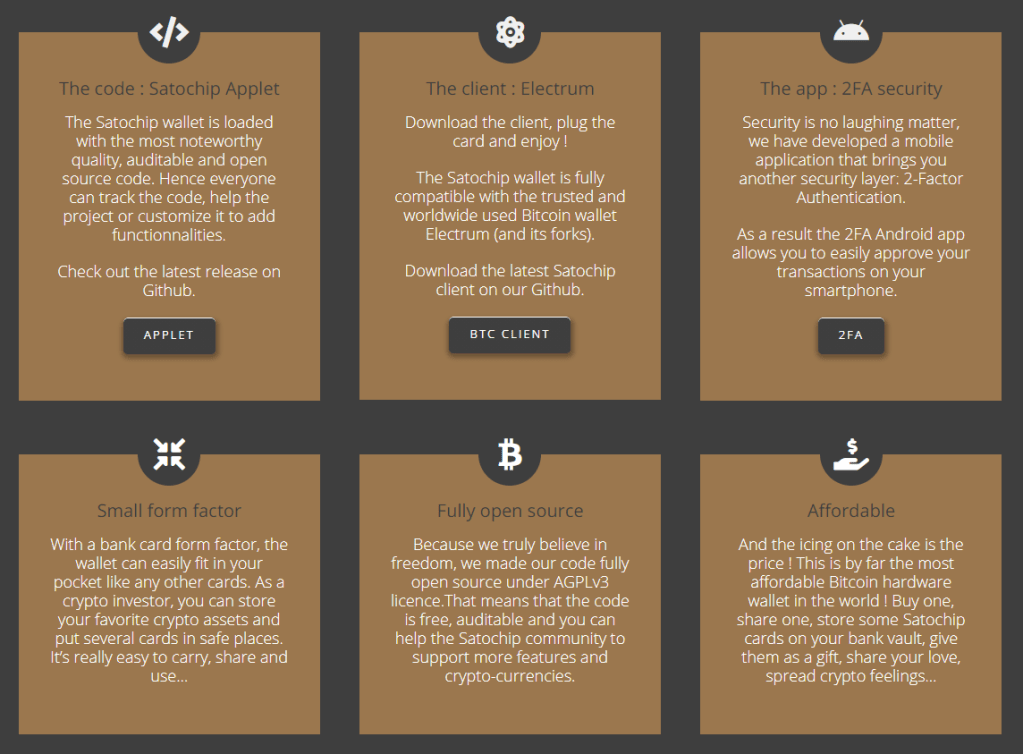
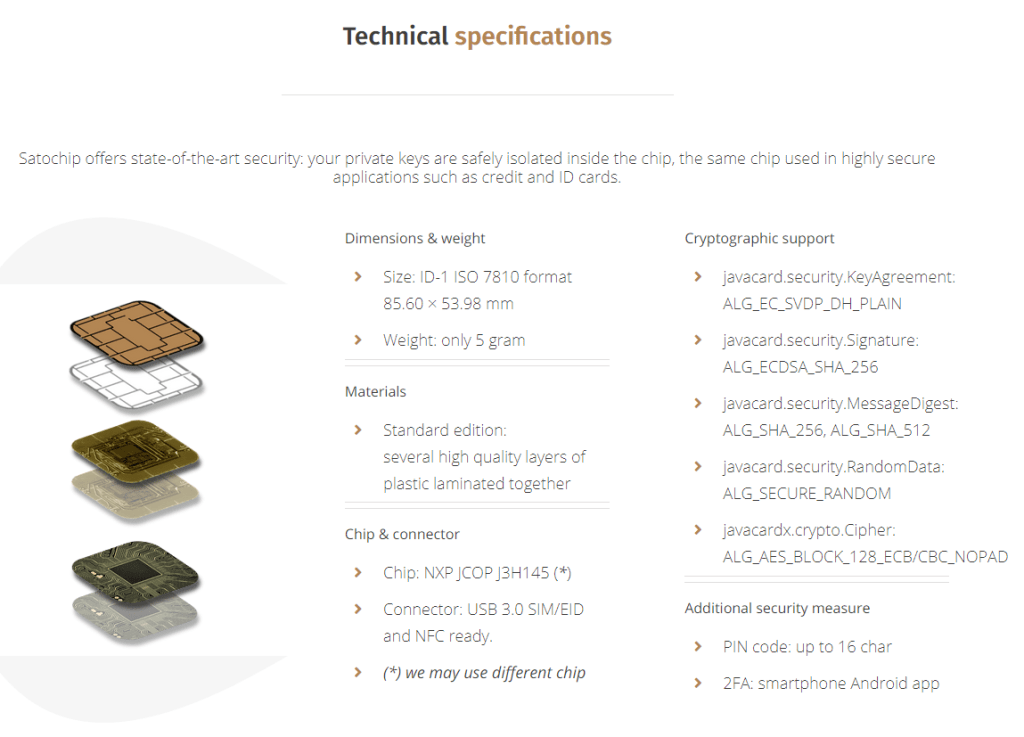
By making use of “contact interface javacard” and making use of a JCOP (Java Card OpenPlatform) OS, it enables high security for reasonable price. This makes it useful for multi-application markets such as the Cryptocurrency market.
The card is pincode protected AND 2FA (2 factor-authentication) enabled by making use of an android-app. This ensures no transaction can be made without passing through your private phone first.
Furthermore is the chip BIP32-compliant. Exporting private keys from the chip is impossible and up to 16 keys can be imported on the chip.
The 6 pillars upon which SATOCHIP is built are the following:
Technical details:
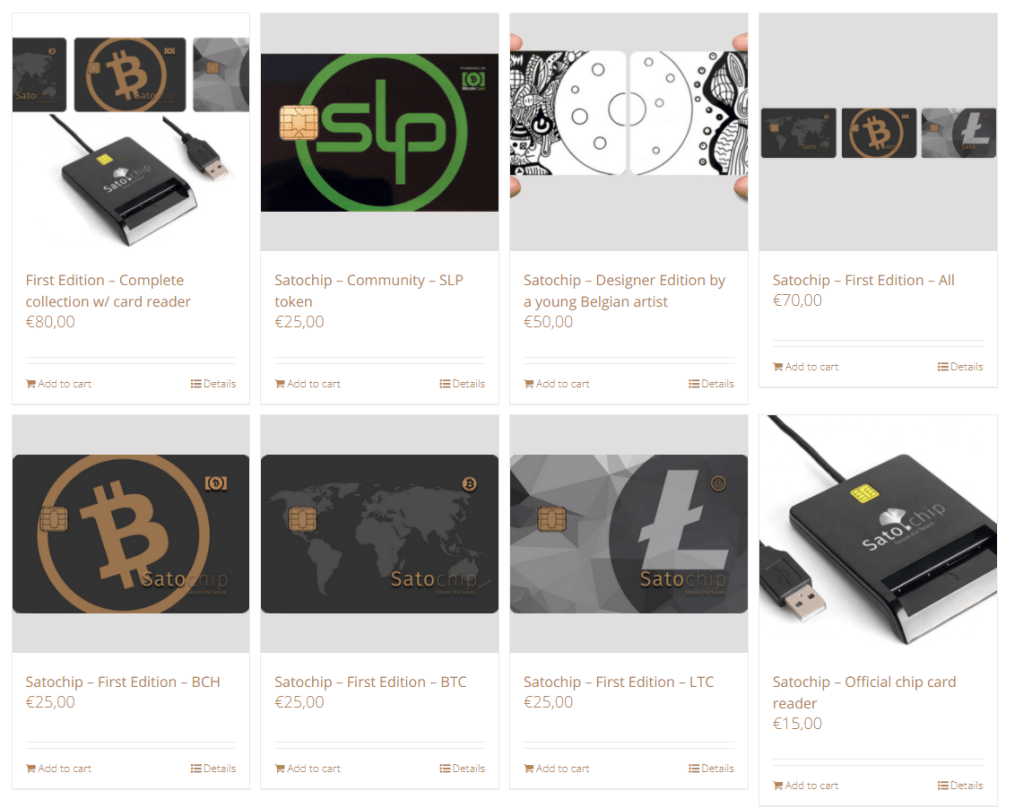
When it concerns design, the developers had sleek design and various options in mind.
The various designs in which it is available are available on the online shop (click on image below).
For more information you can pay them a visit on their:
- Website: https://satochip.io/
- Twitter: @SatochipWallet
- Telegram: Satochip
- Reddit: Satochip
- GitHub: Toporin
 Bit-Block.org
Leave a comment