Let me make one thing clear.
I LOVE the technology that gave rise to Ordinals.
I respect Casey Rodamor and his talents for creating the tech which allowed it… yet at the same time did it open up a door which was better left closed.
Now what are Ordinals?
In short: They are NFTs on the Bitcoin Network.
They are a bit different than the traditional NFTs you know about on Ethereum, Ravencoin and Solana. Ordinals are NFTs which are inscribed onto the blockchain. The entire file is saved on the blockchain. Most other NFTs (as the ones on ETH, SOL and RVN) aren’t inscribed on the blockchain themselves, instead a hyperlink referring back to a central server where they are located is being inscribed. It means that the inscribed link cannot be changed but the data it refers to CAN BE.
Ordinals are the pure sang NFTs which cannot be compromised or changed EVER as they truly are saved onto the Bitcoin Blockchain for all eternity.
A full break-down on Ordinals was made in Februari 2023 on a live twitter stream.
Have a little listen if you really want to have an in-depth insight as to what it is:
The problems Ordinals pose
As explained in the aforementioned twitter space is the greatest problem one of network congestion.
Network congestion as a result of shrinking block-space which in turns supercharges transaction-fees on the network.
Why are high high transaction fees and network congestion problematic?
Let’s put it into bullet points and explain the why’s.
Congestion is problematic because:
- The mempool fills up
This means less transactions are being picked-up.
This means fewer payments are being processed.
This means it takes LONGER for payments to be verified and saved. - It draws people AWAY
..because of slower processing of transactions will less people use the network.
They will be forced to other means of payment. - It leads to competition and a “priority-fee system”.
Which basically means “high transaction fees”.
High transaction fees are problematic because:
- It creates a competitive market
Which means that people WILL be left out or made unable to use the network.
This goes directly against the principles of a free market and fair use (which Bitcoin represents)
It disadvantages people greatly and is only profitable for those who can afford it. - It locks-in and over-inflates market cap.
There is a great amount of people who have less than 200 $USD worth of Bitcoin in their portfolio. Imagine having 10$USD worth of Bitcoin and needing to pay 12$USD worth of Bitcoin in transaction fees. It means you “own Bitcoin” but are virtually incapable of moving it. Your wealth is locked and inaccessible. - It discourages use due to unfairness
Even if you have the necessary Bitcoin to process a payment will human nature still make an evaluation and discourage use if the fees are deemed high.
No one wants to pay a premium price for moving their funds around freely.
A normal man will think twice making use of Bitcoin if he wants to move 100 $USD worth of $BTC if he needs to pay a transaction fee in excess of a dollar or 2. It is loss of wealth.
In short: Ordinals pose a great problem to Bitcoin as it hampers mainstream adoption and even turns people away from Bitcoin due to creating congestion on the network and high transaction fees as a result.
“But what about security budget? Ordinals allow for miners to make more profit!”
First things first. There have been many voices that proclaim Bitcoin has a security budget problem. Their reasoning is as follows:
- Mining Bitcoin becomes more competitive (ever-increasing hash-rate) which means the costs of deploying more (and more powerful) miners rises. In order to cover the costs of mining will MORE Bitcoin need to be sold in order to secure the network. At the same time, due to halving events, is newly minted Bitcoin as a mining reward being reduced. This eventually leads to miners earning less money, getting at a loss and no longer securing the network.
Sounds reasonable right?
This theory (purposely) overlooks a few fundamentals where it concerns Bitcoin halving events as well as common sense. Those who adhere to the theory of Bitcoin having a security budget problem tend to be either “new” or fail to understand the well-established trend of Bitcoin Halving Cycles. An in-depth video explaining it in more detail can be found here.
In a live stream video earlier this year, I debunked this myth in detail:
For those who do not like watching the video, here are a few bullet points to dismiss the claims:
- While true that mining rewards are slashed with each halving, costs are not forcibly paid by selling off Bitcoin.
- Bitcoin is an appreciating asset. Due to its rise in value over time will, at average, less Bitcoin need to be sold in order to cover mining costs.
- Innovation is ongoing within the Bitcoin ecosystem. New miners become more efficient and use less electricity (lower costs) for higher hash-rate output (increased added security).
- Miners seek to minimize costs and increase profitability before they start mining. They look towards renewable cheap energy as well as lower costs elsewhere through dual-purpose mining.
- There is a good amount of miners who stack their Bitcoin and use money from their 9-5 (or side-hustle) to cover the costs.
And what about Ordinals “fixing” this?
Touted as a “great” solution.
In reality?
They are a half-assed fix to a non-existent problem. As mentioned under the previous title is one of the problems of Ordinals that of creating congestion and, as a result, high transaction fees.
The same people proclaiming that Bitcoin has this security budget problem are the same people who think high transaction fees will solve the imagined problem. After all, part of the reward that miners get for their work is a combination of the fixed decreasing reward and the transaction fees. In this simplistic equation is it indeed correct that by increasing transaction fees that the “security budget problem” can be fixed.
As can be deduced is there a willful ignoring about existing, and active factual, alternative funding going on which helps sustaining the network and keep miners profitable. A willful ignoring of dynamics in place ever since the inception and launch of the network.
It’s however not all too negative. Due to the high transaction fees that Ordinals cause can older ASIC-miners remain more profitable for a longer time… at the cost of a congested network and slowed down innovation on the long term. It is comparable by keeping old coal-based energy plants online for “economic reasons” while the world is suffocating under toxic smog and in dire need for innovation and cleaner tech.
Ordinals IS an attack on Bitcoin!
Congestion and high transaction fees are a given.
But why consider it an attack on Bitcoin?
For the simple fact that it is using the network outside its intended purpose.
By attacking the ideas and fundamentals as to “why” it was built and allowing speculation to occur in disregard to its intended purpose and use: “Peer-To-Peer Electronic Cash System“
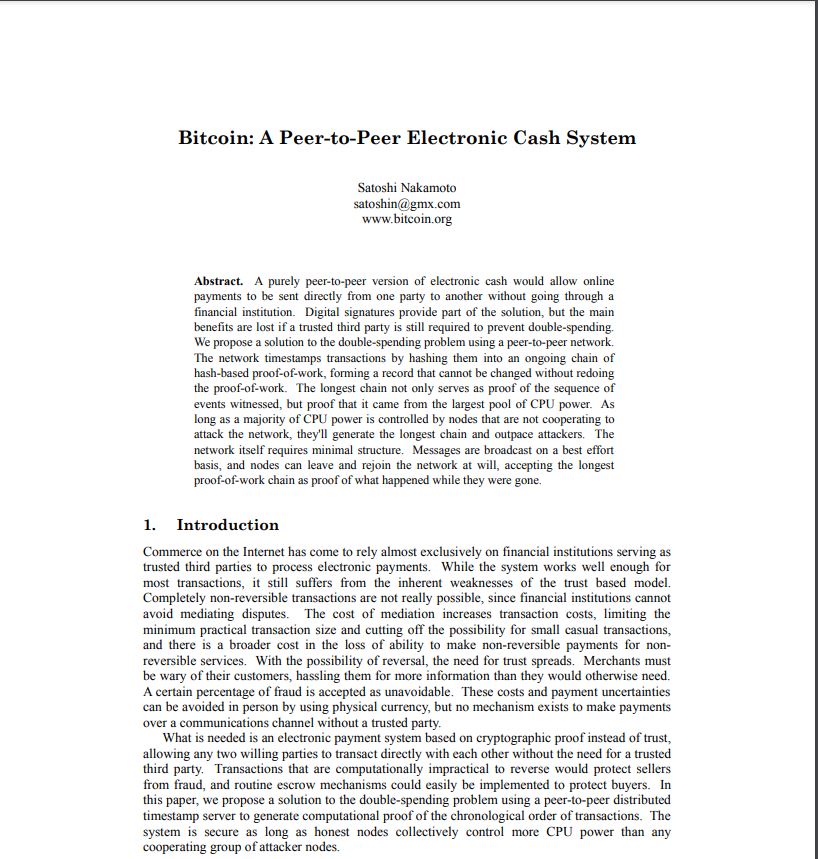
Ordinals effectively makes the Bitcoin blockchain akin to the Ethereum network.
Its disregard to the use-case means negating the great work Bitcoin has done in many Southern nations and countries trying to escape inflation as a result of flawed (Western) financial decisions and abuse.
It would imply that all the great things that Nayib Bukele did with El Salvador (saving the country from hyperinflation by adopting a Bitcoin as legal currency) would be negated (high transaction fees making Bitcoin a lesser fit for payment processing and forcing people back to the alternative hyper-inflated fiat currency that is the $USD).
It would mean that the great work done by my friends from Bitcoin_Dada becomes void in Africa for the same reason. Too high transaction fees would force the many African citizens straight back into the system they were trying to escape from. ( Bitcoin_Dada is a Bitcoin-orientated educational organization. I had the pleasure of doing an interview with the founder and getting an in-depth introduction to this great organization pushing Bitcoin-innovation. Find the interview here.). As a result will see many great people like Nikolai Tjongarero ( interview here) and the man behind Machankura (interview here) see much of their innovative work pushing Bitcoin into the mainstream being put to shambles…
It would ruin Ray Youssef‘s work to unite “The South” under Bitcoin and undermine the building of his Peer-to-Peer free market (aka CivKit) as the high transaction fees, as a result of Ordinals bloating the blockchain and using up all block space, would limit the amount of participants to those who can “afford” to move it.
It would negate all of the efforts of Joe Nakamoto to bring Bitcoin into the mainstream by highlighting its advantages over fiat money and introducing hundreds of people to Bitcoin.
The effects of of congestion and high transaction fees are not to be underestimated.
Luckily do we have the Lightning Network as an L2 which enables mainstream adoption to continue. Lightning Network is to be now regarded as the “monetary settlement layer” for Bitcoin which gives some reprieve to the destruction that Ordinals causes…though only temporal as it too, in due time, will and can feel the effects of Ordinals caused on main-chain.
Making Bitcoin about anything else but a Peer-To-Peer Electronic Cash system is to be considered a direct attack on the network. People like Udi Wertheimer (who proudly touts of having “broken Bitcoin”) are to be considered as enemies of the Network and be treated as such.
 Bit-Block.org
Leave a comment