In order to get a full understanding as to what is happening with Bitcoin on a fundamental level, and getting a good grasp on the subject at hand, I advise people to read up this following thread from SimpleMining: A quiet change in Bitcoin Core just blew open a years-long battle. It gives a somewhat objective overview and background on what is going on.
The synopsis is this:
– A PR (pull request) was made by Peter Todd which removes the limit of data that can be added to the OP_RETURN function (explained in plain English as: “allows for more arbitrary data to be saved”)
– At the same time was a proposal made (and now indicated as deprecated) to remove a function which allows nodes to filter out transactions with the OP_RETURN arbitrary data.
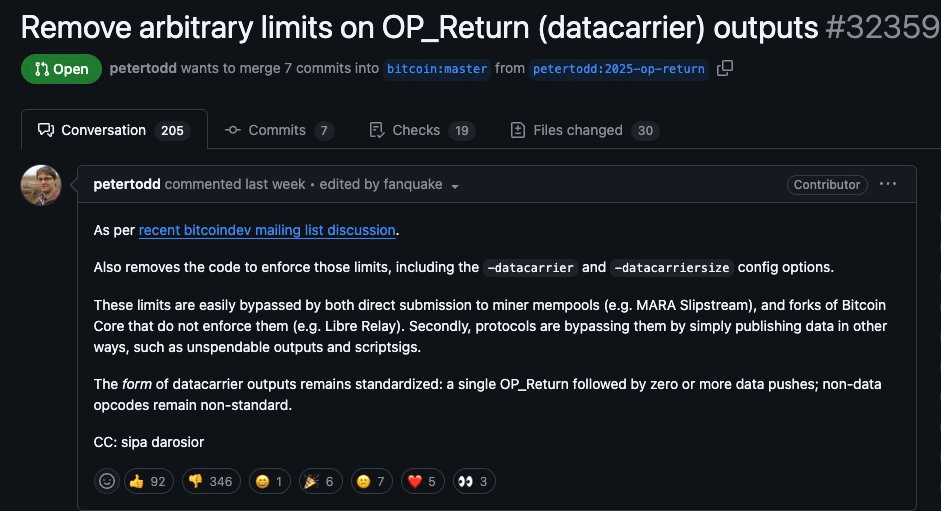
The combination of this proposal and PR implies a change of direction in regards to Bitcoin.
Mainly that Bitcoin could become a “free-for-all data cloud storage system”. Something it was NEVER designed to be. (Bitcoin is designed to be used and function as a currency as stated by design and its whitepaper).
What about Noderunning?
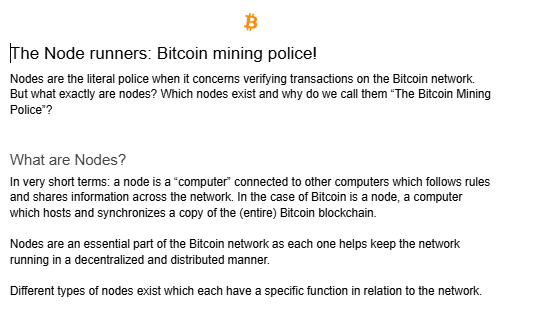
To understand what a node is, within the Bitcoin network, I refer to my Bitcoin Mining Standard guide:
Unlike Bitcoin miners do noderunners have no incentive to run their nodes.
Noderunning is on an entirely voluntary basis.
One of the key-aspects to running a Bitcoin node is the “intensive” use of an internet connection and having a small computer, with a great enough storage capacity to host a copy of the entire Bitcoin blockchain, run 24/7.
As there is no incentive to being a noderunner, it implies that noderunning must be done as economically as possible:
- choice of computer and storage capabilities (i.e. low energy demand and being able to host the ever-growing Bitcoin blockchain for years to come without having to switch out often).
- a decent internet connection which allows “intensive” data exchange with the network
Noderunning can be started by downloading a Bitcoin client on your computer and keeping it running 24/7.. though better and more efficient means exist.
What are clients? Software programs which allow for interaction with the Bitcoin network. Best seen as “browsers” like Internet Explorer, Google Chrome, Opera, Firefox, …
An overview of Bitcoin clients:
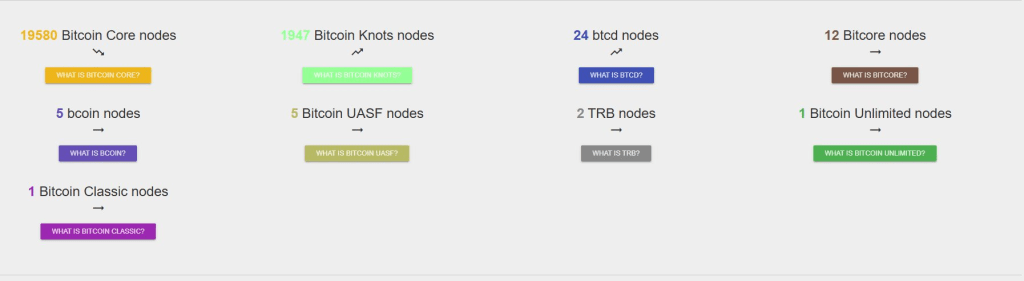
By making use of these clients, you have a say about the information you can relay back to the Bitcoin network. All clients allow you to set up rules on what kind of data you want to share to the network. In regards to the topic at hand, filters can be set up by which prevent your node from validating and sending the OP_RETURN arbitrary data to the network.
Why those options? Because nodes protect the network against attacks in regards to double-spending, they are responsible for consensus (i.e. through transaction validation and verification) and keeping up an uncensorable copy of Bitcoin history (i.e. its blockchain).
Another function of these filters is to allow noderunning to remain economic.
Running a node must remain affordable as it is key to securing the entire network.
How to run a node economically?
– Make the setup is affordable and sustainable on the long term (low energy use and big enough storage capacity)
– Adjust settings as to prevent increased intensive connectivity issues (i.e. stable internet connection).
The latter can be done by adjusting the client to filter out certain types of transactions which are data-heavy (i.e. transactions with the OP_RETURN + arbitrary data). Current limit in BitcoinCore is defaulted at 83Bytes… which is enough to allow creative coding to have transactions of almost 4MBytes in size filling up an entire block by itself. The result of this was a mempool full of delayed (smaller) transactions which had to wait before being picked up.
In short: the filters allow for less intensive internet use.
Through consensus does it allow for less data-heavy transactions to be saved onto the Bitcoin blockchain and in turn lessens the need for fast increasing storage capabilities of the computers which run nodes (lowering costs and making them more sustainable).
Node strain?
Noderunners have the incentive to economize.
To run those clients which allow a good degree of liberty and options to what each noderunner believes is best for the Bitcoin network long term.
What people fail to realize is the strain that a badly adjusted OP_RETURN+arbitrary data gives to noderunning.
Strain in the sense of:
– Creating a “compact” blockchain history which allow for quick synchronization for new noderunners
– Strain on internet connectivity as a result of data-exchange to the network.
To illustrate this, I have been playing with my own Node (through the BitcoinKnots client).
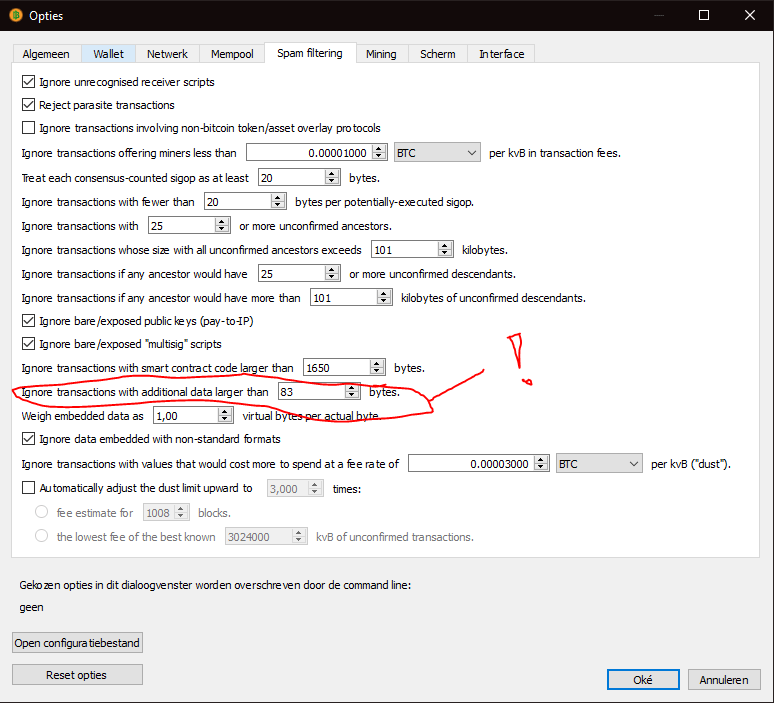
My standard setting is “Ignore transactions with additional data larger than 0 Bytes”.
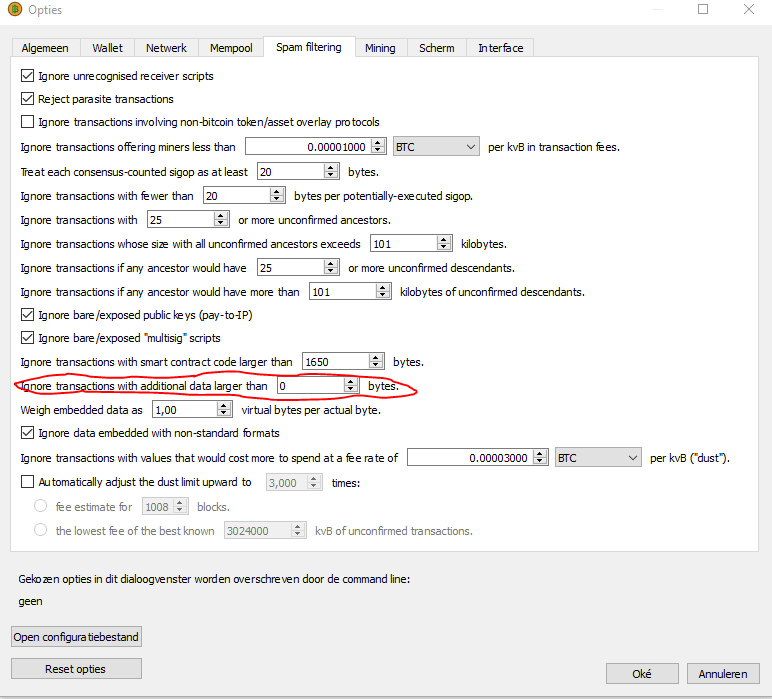
For 24 hours did I change this setting to allow for 83Bytes.
As seen here:
The result? Quite staggering.
I adjusted my setting between 11-12 noon (Brussels Time) while monitoring it for 24hours.
The immediate change in settings resulted in an immediate peak of transactions (due to Runes and Ordinals spam) as well as dynamic RAM usage.
The full thread can be found on my twitter here.
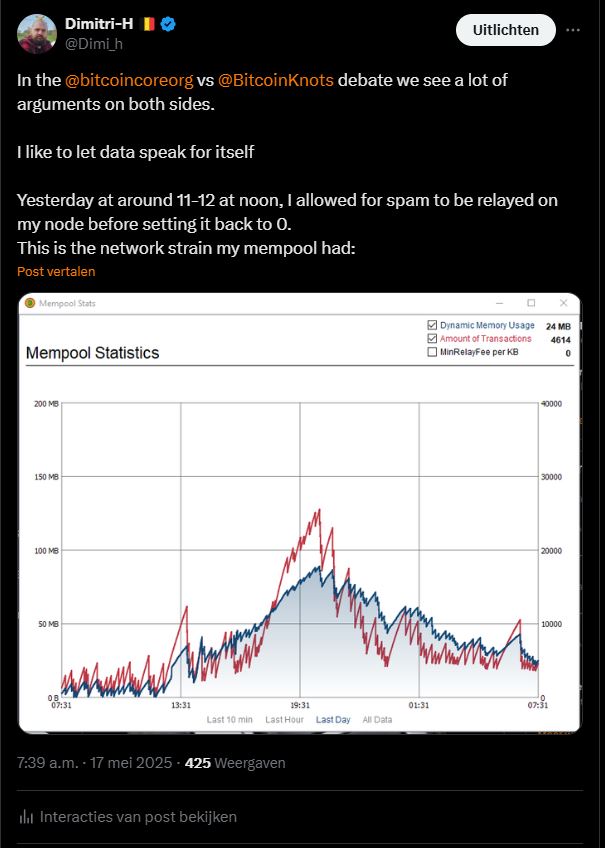
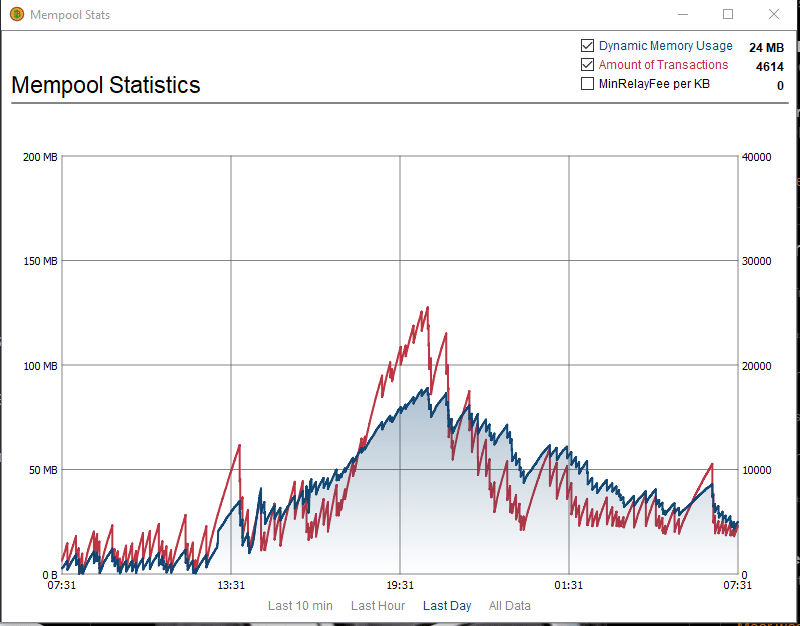
What is shown here IS strain. The surge in relayed data has an effect on my internet connection. Which means if I did not filter will A LOT more data be exchanged and possibly straining my internet connection.
Better, it means that the Bitcoin blockchain is seeing an increased (exponential) load of data carrying which speeds up the retiring of the hardware for noderunning.
Arguments made will be along the lines of:
– “But a better internet connection”
– “Sacrifice to the network”
– … and more along those lines.
So that’s why a basic needs repeating:
1) For Bitcoin adoption are MORE noderunners needed. It means that noderunning must be made efficient. It means adhering to the principle that Bitcoin is to be used as a currency and data relayed is to be with as less arbitrary possible WITHOUT impacting security. I.e. running a node must be economic as there is no incentive to run one. The less additional data, the better on long and short term sustainability!
2) Ordinals, Runes are NOT valid transactions.
This, despite what people tell you. The narrative of “it is a fee market” is a lie being told being based on greed and the myth of “Bitcoin has a security budget problem” (it doesn’t). Filter the spam out, the network has been doing fine without it for +12years and was even more profitable for miners back then (in terms of Bitcoin earned). Noderunning was “easier” as the risk of retiring the node was drastically lessened due to the lesser strain and bloat of the blockchain.
 Bit-Block.org
Leave a comment