Year 2 A rainy year with some misfortunes, flowers and plenty of pumpkins and Zucchini’s
The full thread of my 2024 farming adventure can be found on X here:
Dimi_H 2024 farming updates
2024 was the year where I took home gardening more seriously.
Where I got more invested into succeeding the crops I grew.
Sadly enough wasn’t it an all to good year for farming.
While we do saw sun during summer, the weather was mostly rain.
As a result did the carrots and potato crops fail (carrots didn’t grow and potatoes remained small).
Even the cherry tree which normally gave plenty of cherries to work with had difficulties, most of the cherries were either rotten or bursted as a result of the soaked ground as a result of the rain.
None the less, I had a few successes. Enjoy my farming adventures from 2024
Year 2 – January to June
With the birth of my son, I didn’t really keep track of the gardening endeavors from January to June.
Most of the work was keeping track of the growing beds, cleaning them out, tilling them during freeze and keeping the soil loose and aerated.
In December 2023 and January 2024, I made up my mind on what vegetable to grow.
I would start out with onions, carrots, cucumbers, pumpkins, butternuts and zucchini’s.
These are considered as “easy” vegetables and are native to Belgium so they should thrive here.
Seeds were being sown in dedicated wooden boxes up until I had sizable sprouts whom were ready to be planted in full ground.

When it was around June, it became obvious that the carrots and cucumber wouldn’t be a success.
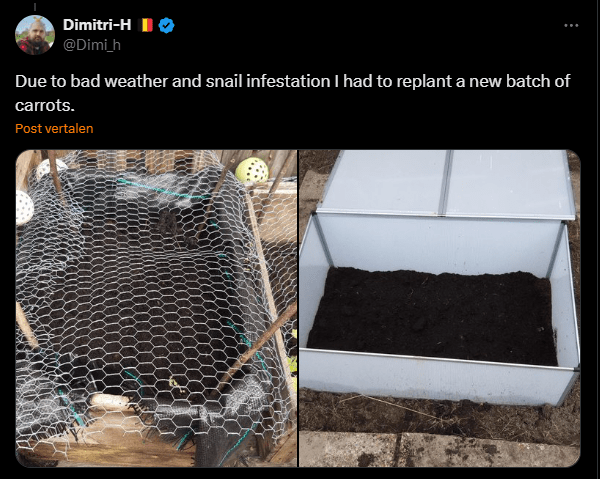
Due to heavy rains in spring was the first batch of carrots eaten by snails. None sprouted.
The cucumber I had directly planted in the full soil… never got past the seedling phase and just drowned due to rain.
A new batch of carrots was sown in dedicated growing box where I had previously grown some of the garlic. Almost out of season but with a little luck I might have some yield.
The garlic itself was a mixed success. All of them had grown but the bulbs were rather small.
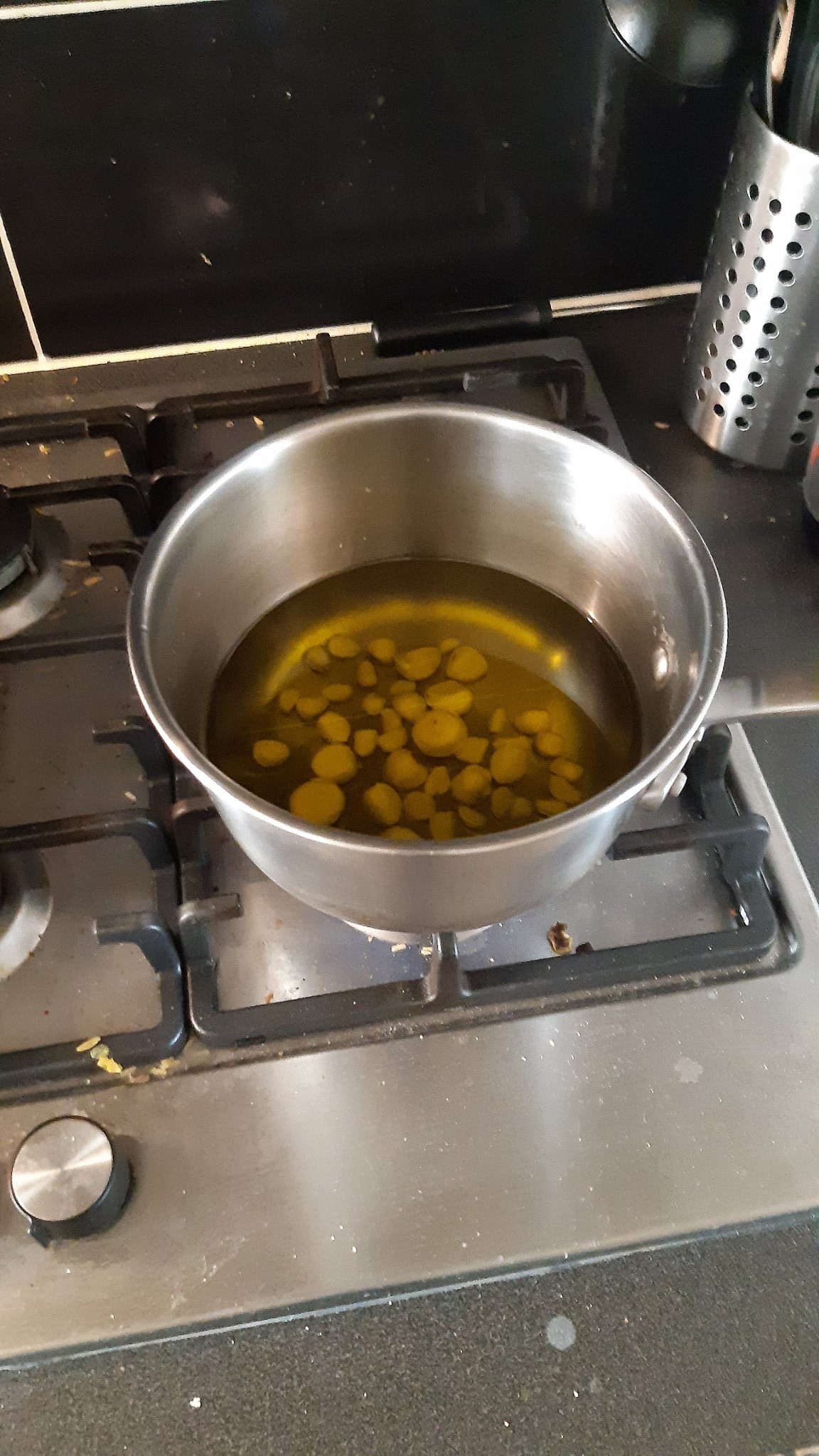
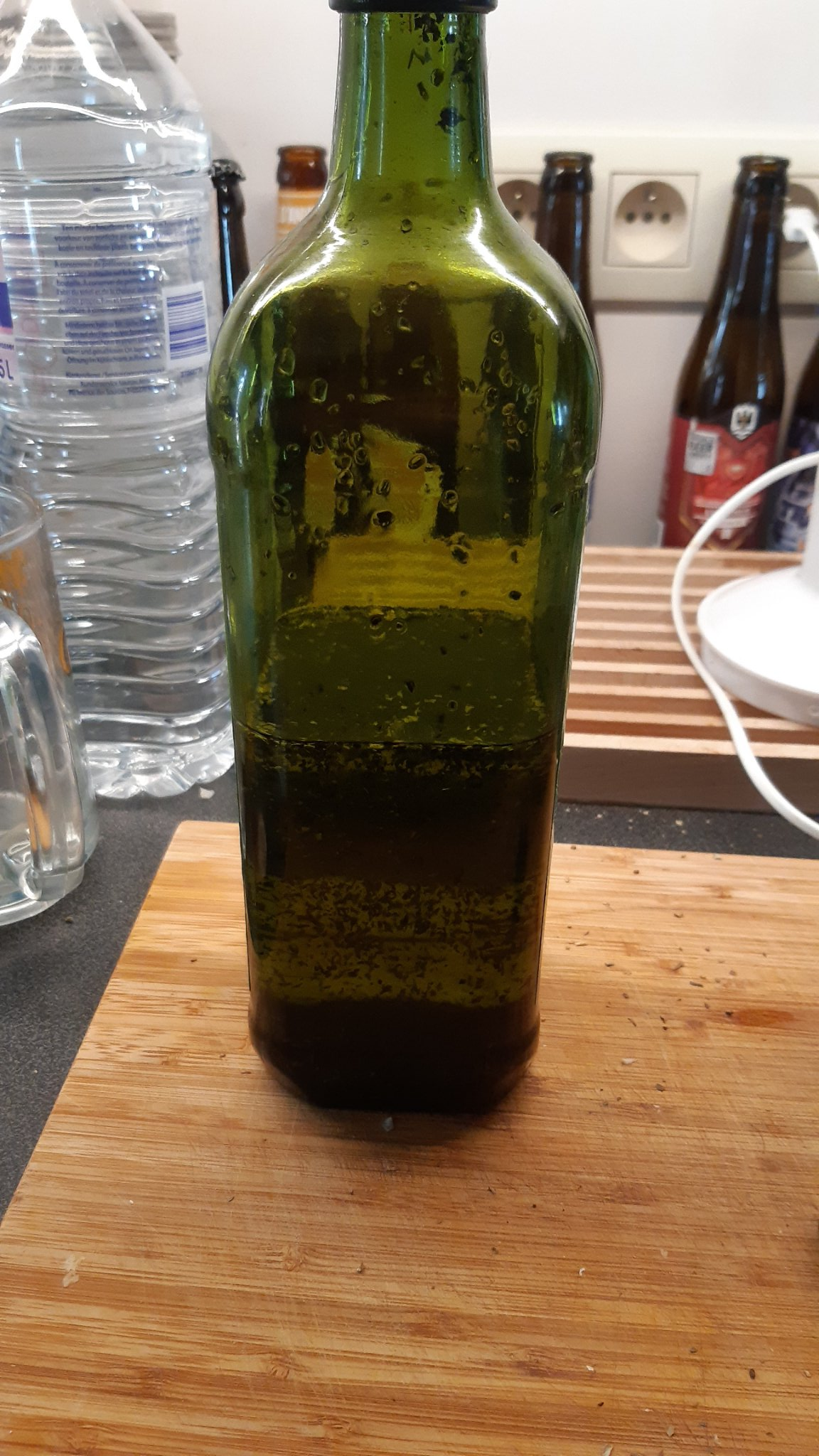
The mistake I had made was planting too many to close to each other which resulted in small garlic bulbs. I left them to dry for a few weeks and used them to make a garlic spread (candied garlic) and garlic oil.
This was done by cleaning the garlic and boiling it in premium olive oil.
The resultant garlic oil could be used in a plethora of recipies (or as salad dressing).
The candied garlic was used to make garlic bread with ham, mozarella and rucola.

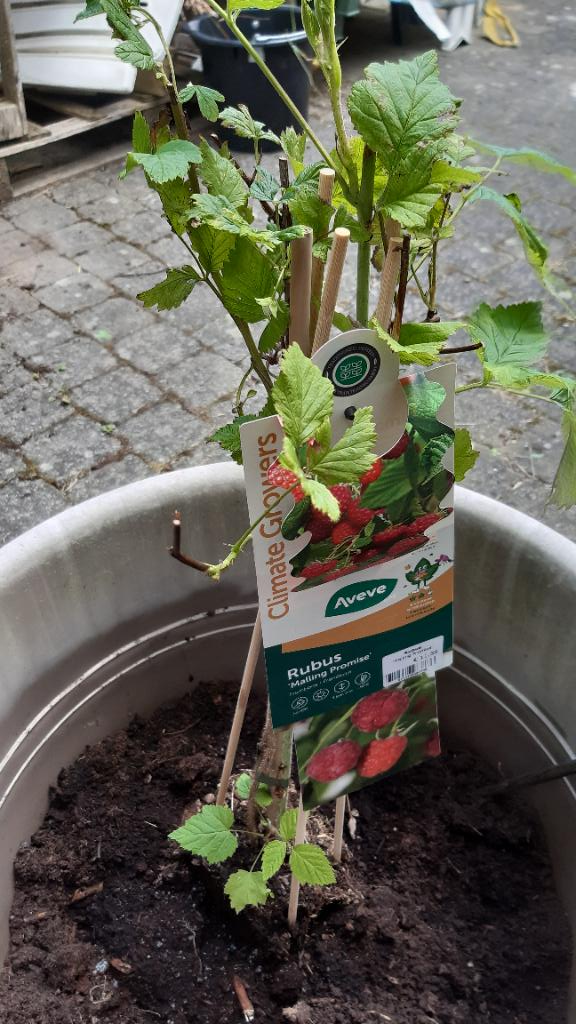
In the same month of June, I decided we could do with some more fruit grown at home.
For this reason, I bought 2 raspberry shoots and planted them in the big flower pots which housed the sunflowers last year.

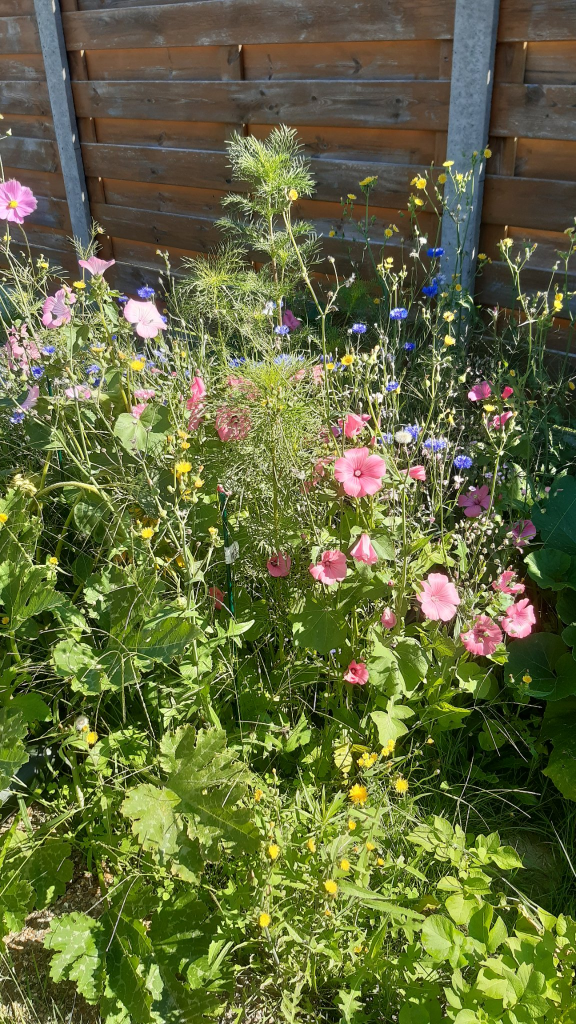
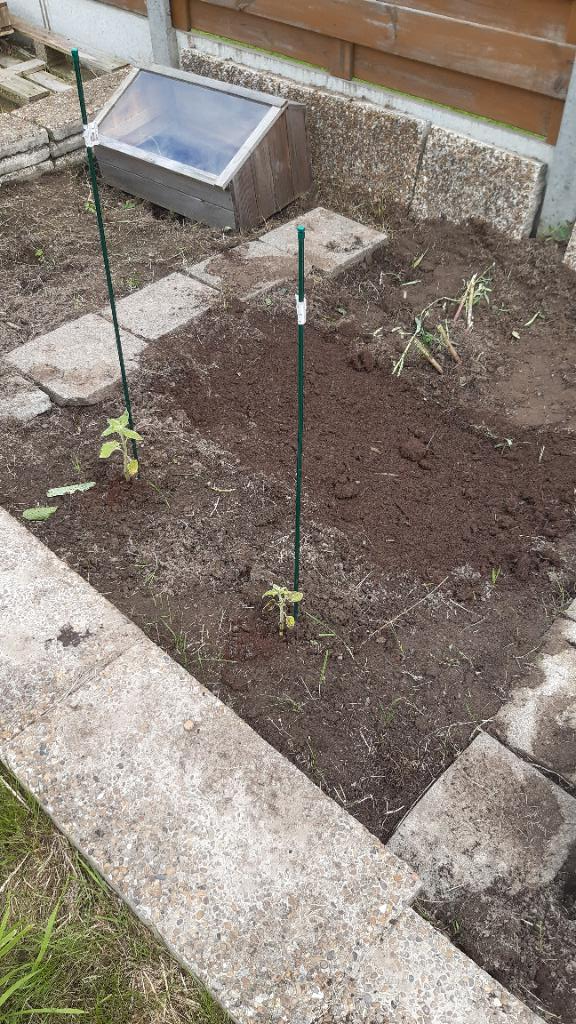
In order to attract pollinators, I also decided to create a wild flower bed.
In this wild flower bed, I also planted the 2 sunflower saplings I got from my mother-in-law.
Year 2 – June to August – when weather turned sour.
Everything was going nicely up until late June.
Plants were growing well but we started dealing with frequent rainy days.
As a result was the cherry harvest a bit of a dissappointment. With A LOT of effort was I able to harvest just enough cherries to make about 1kg of yam.

July was a month of keeping an eye out on how the garden would evolve.
Plenty of rain made it so that the soil was DRENCHED and rock hard to work with.
The onions I tried to grow were hit hard due to the freak weather. Some of them started to look bad and I was genuinely afraid I would lose part of them (eventually, they pushed through).
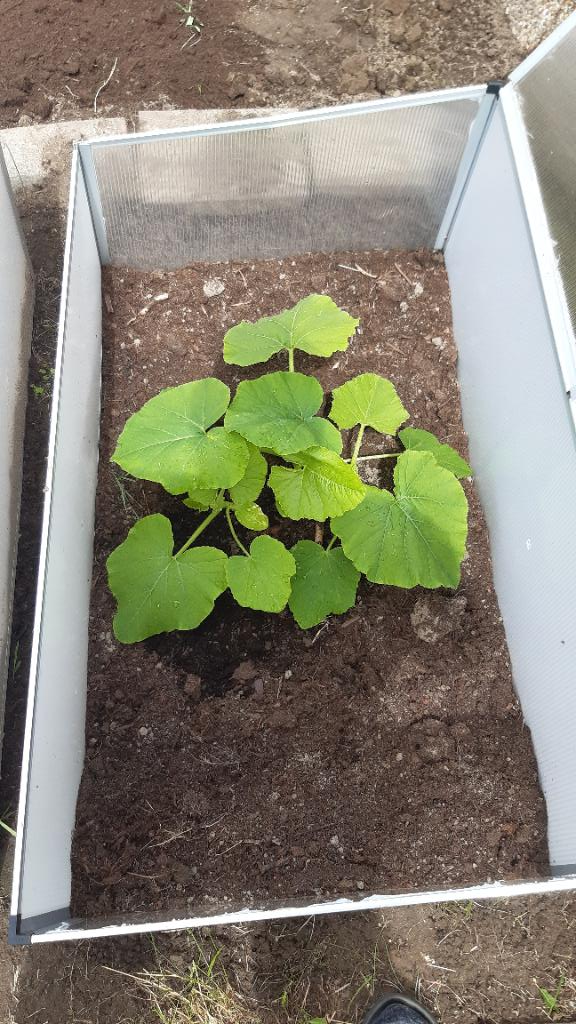
Luckily, the vegetables I decided to focus on this year (pumpkin, zucchini and butternut) all need plenty of water to grow big. In August, I could see the first results as one of the first zucchini’s was harvested. A few days later was the second one ready.

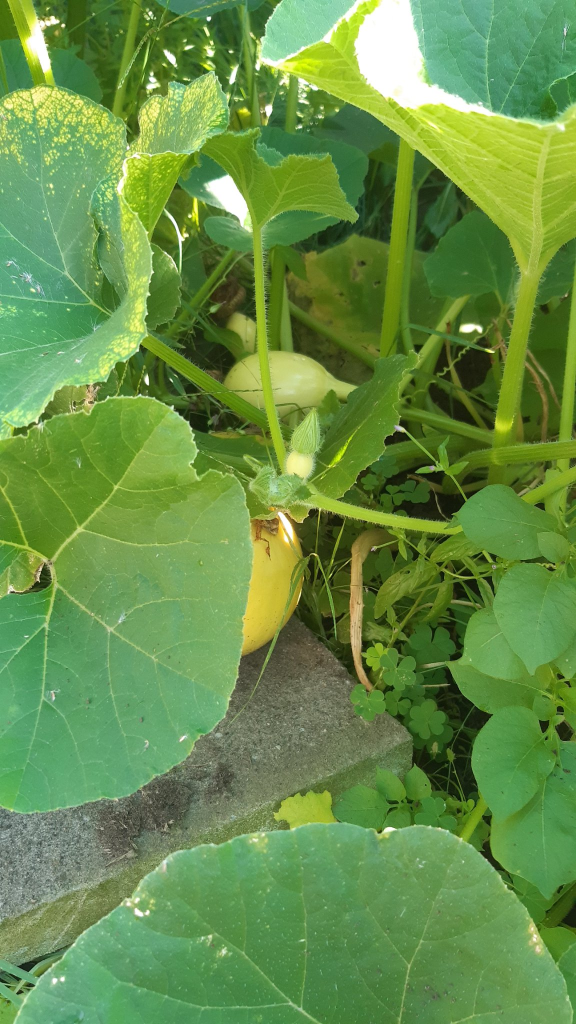
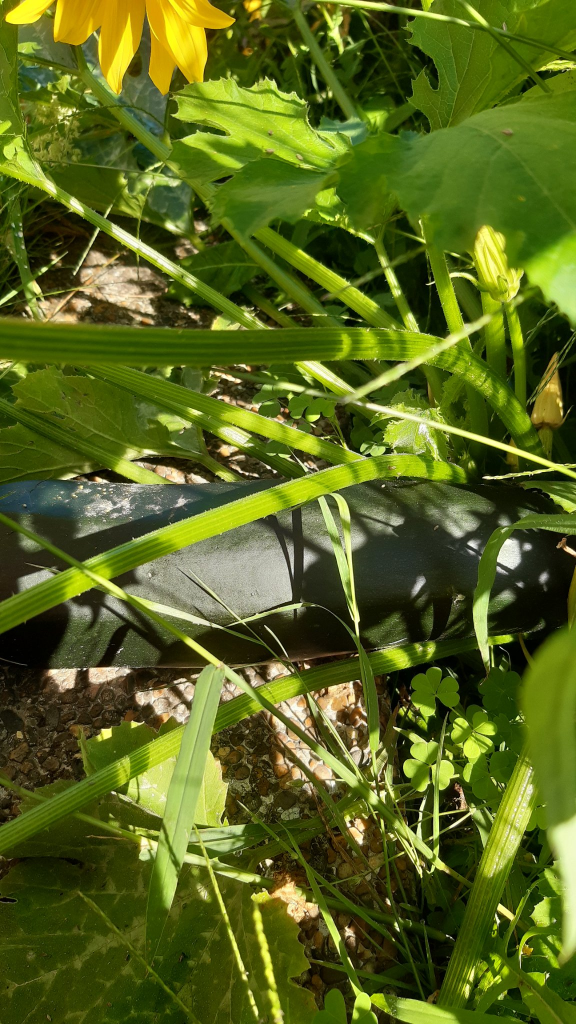
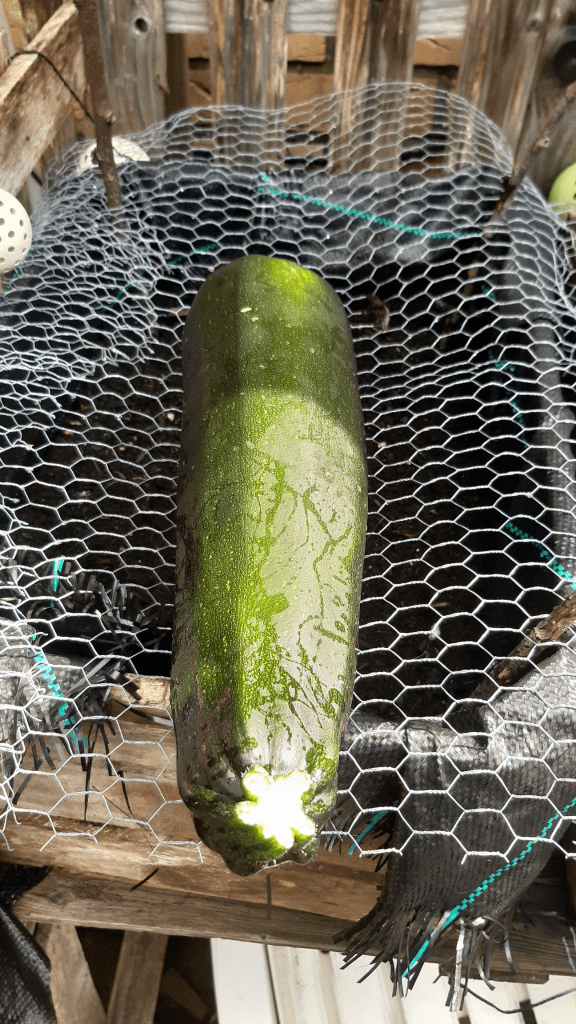
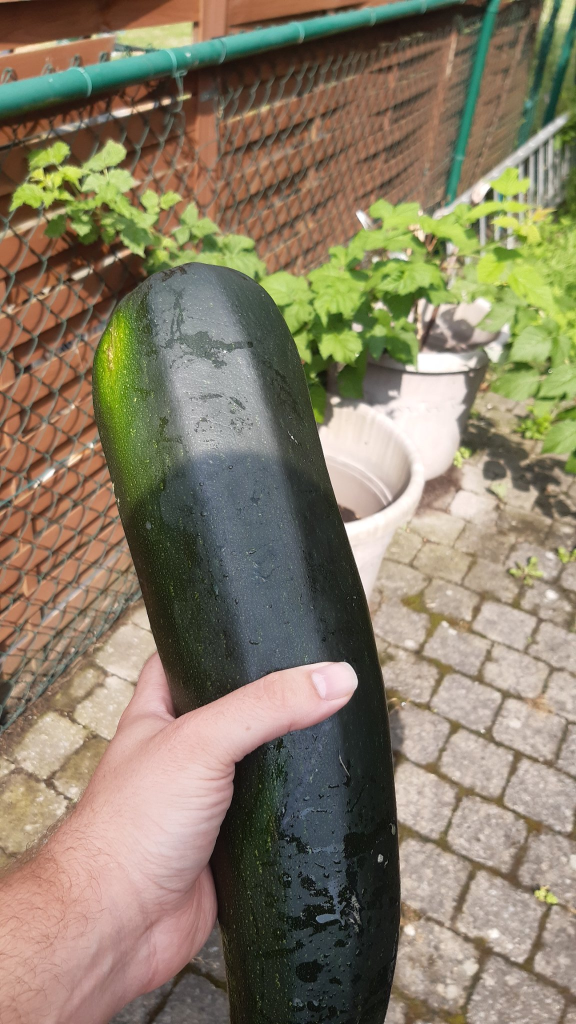

The Zucchini’s gave me some good hope that the garden could still bring about some decent yield. The zucchini’s were prepped for storage in the freezer and one of them also ended up being made into a healthy soup.
Year 2 – September – October – Zucchini’s and pumpkins and butternuts and garlic and something new
The months September and October were mostly about keeping the growing beds clean and making sure that the pumpkins, butternuts and zucchini’s could grow nice and big.
Multiple harvests were made during this season.
Mostly the Zucchini’s ( all were being prepped and frozen). Some of the zucchini’s I gave away to family as there were simply too much of them.
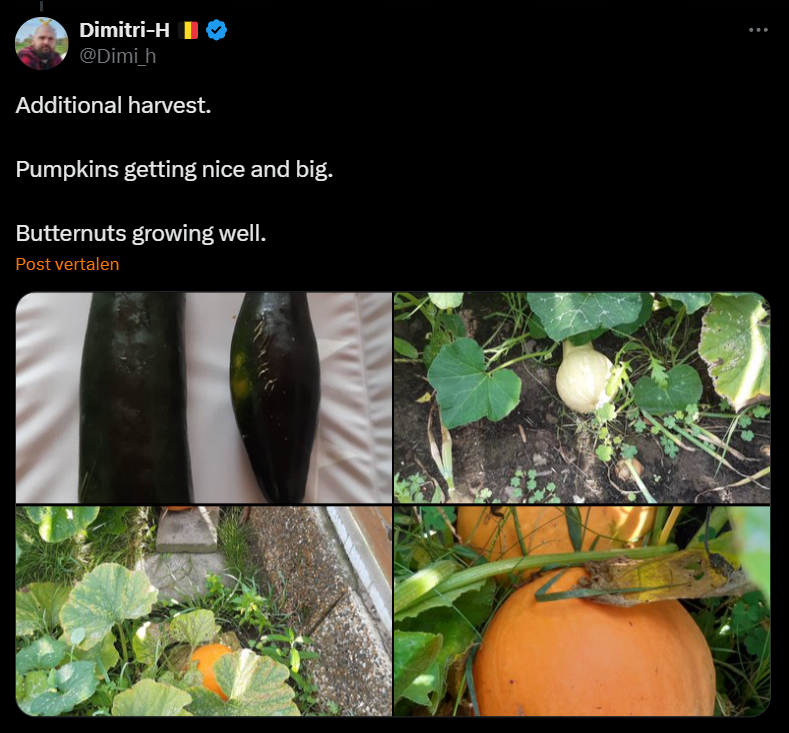
As September came to a close I decided to harvest all that I could.
I had some hopes but in the end was a bit disappointed with the yield due to the bad weather during the summer months.
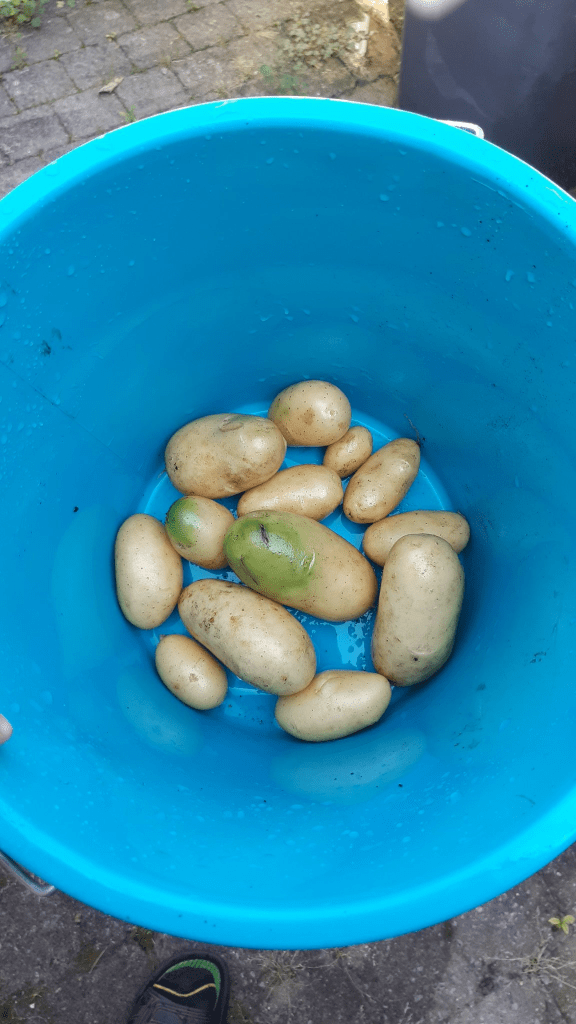
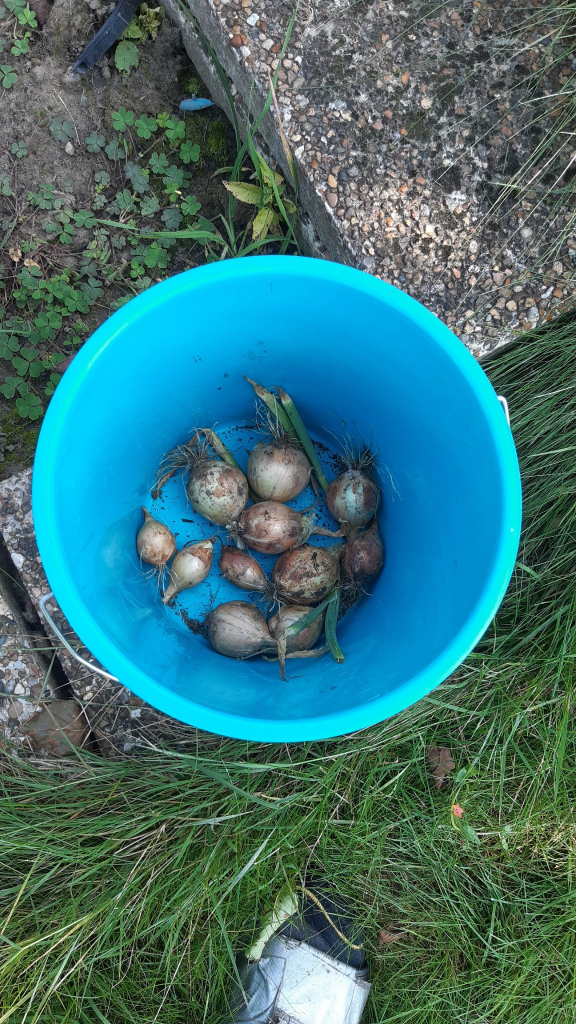
Onions were rather small DESPITE having chosen to plant the Excelsior type (which can grow up to weigh about 1 kg each). Potatoes were a disappointment as well as I mostly had to deal with small ones (“bintjes” or smaller). Here, I must admit it was my fault. I had planted them in untreated soil and they only had about 10cm of loose non-enriched soil to grow in… which resulted in their small size.
This was a (harsh) lesson I learned as it also applied to the onions and as to why they didn’t reach their hoped size.
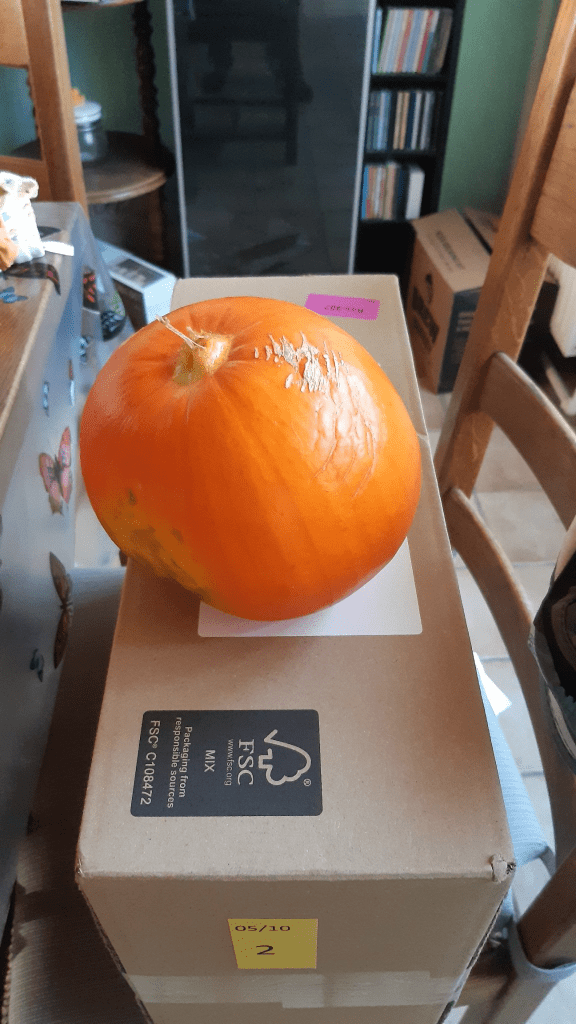
The first pumpkin harvest occurred on October 5th.
It was one of the 3 pumpkins which were growing in the garden.
The butternut took up more time and it wouldn’t be until we neared the end of October that I got my first butternut harvested (when I decided to harvest my 2 other pumpkins).
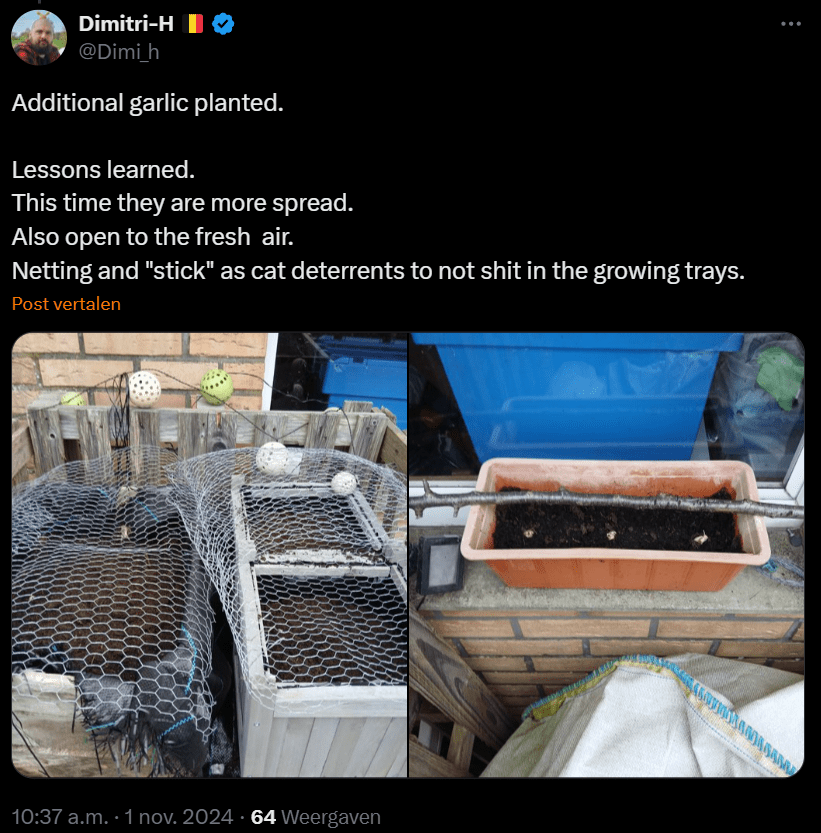
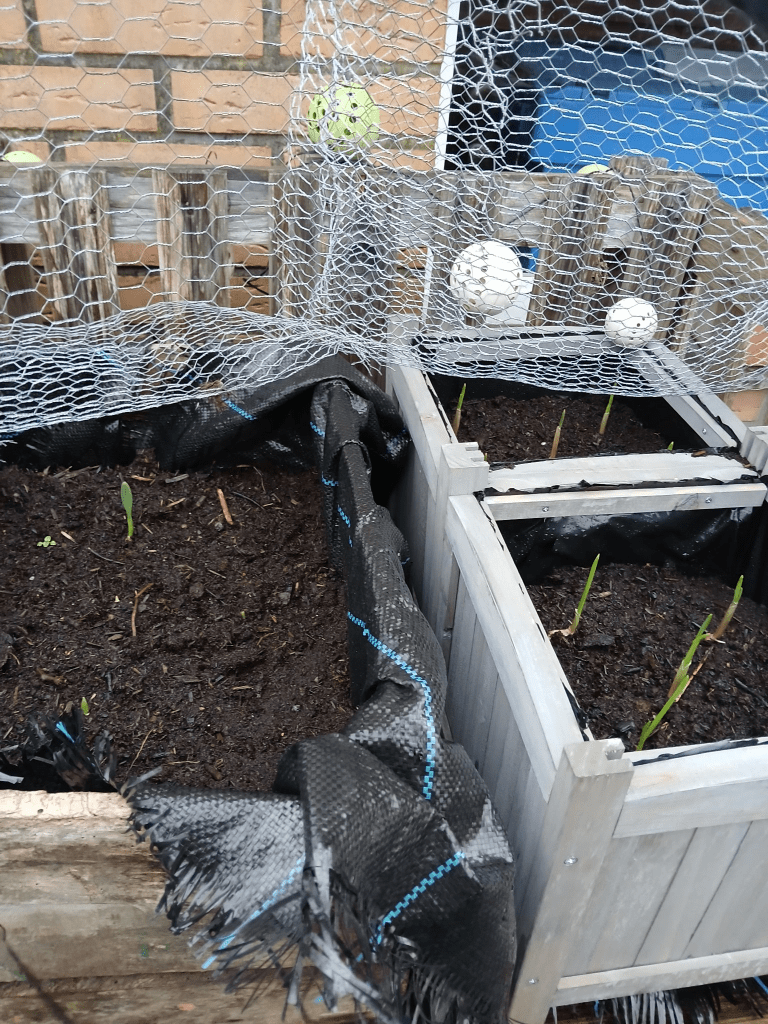
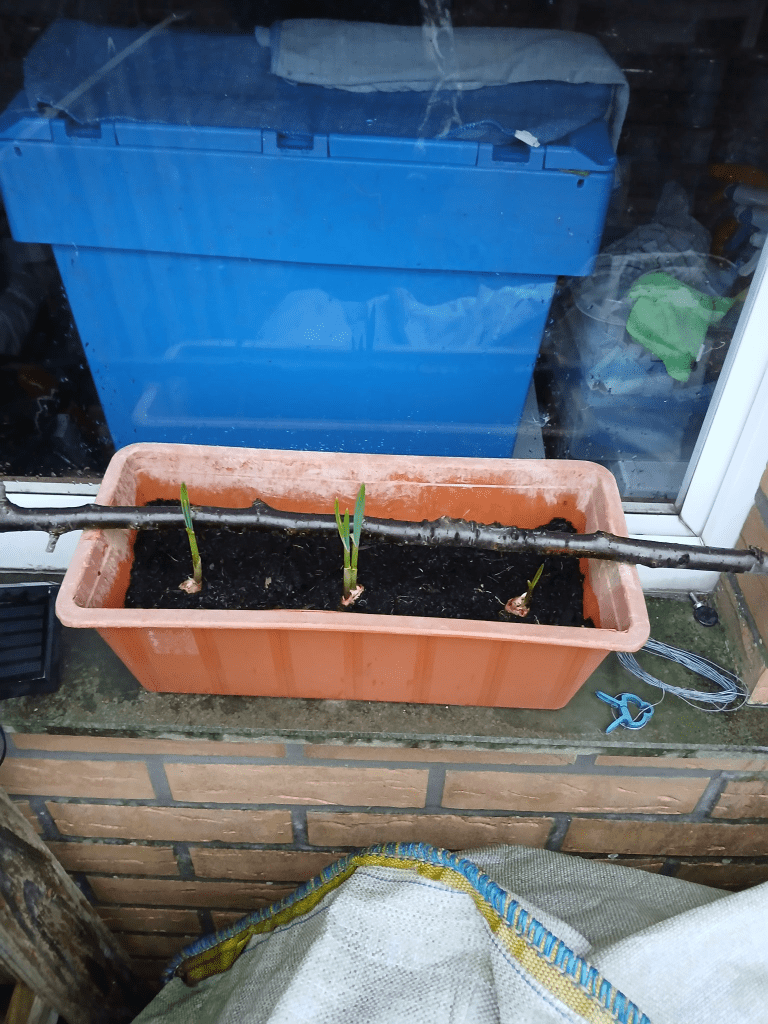
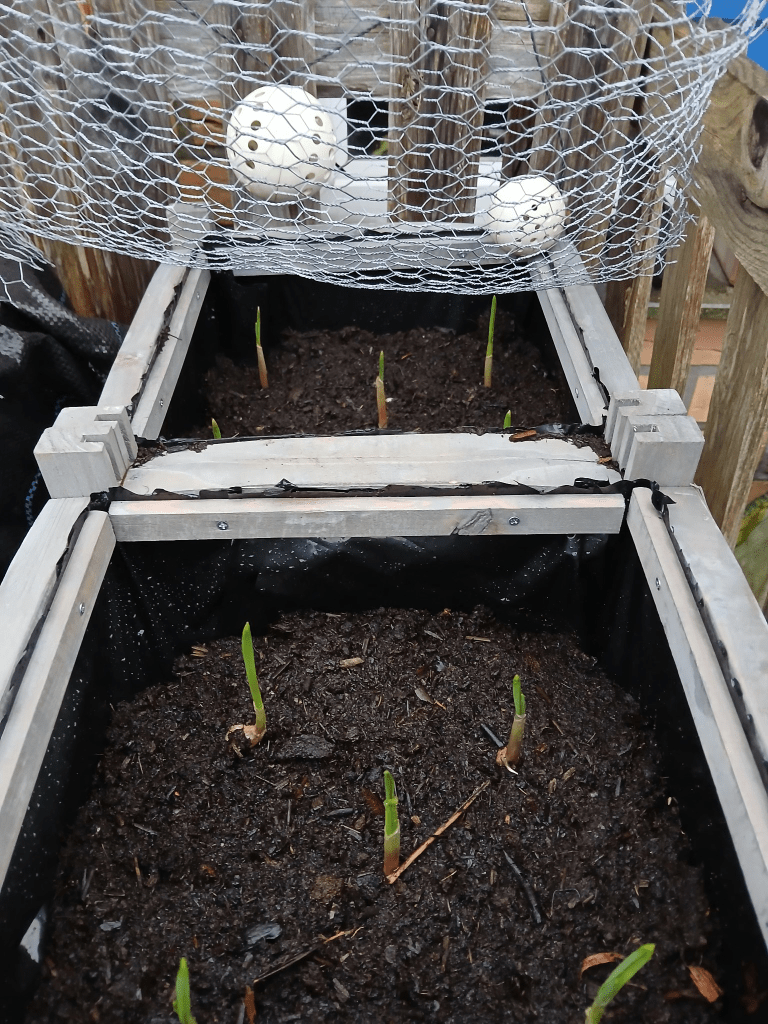
In the meantime, I decided to replant garlic and see if I could learn from my mistakes from last year.
I would also try my hand at growing chicory (as me and my wife love to eat it in various dishes).
Where it concerns chicory, there’s 2 ways to go with it:
- First is by going from ground zero (i.e. sowing seeds, growing and cultivating its roots and then in October start the ACTUAL growing of the chicory)
- Second is a “shortcut” by buying chircory roots and growing the chicory itself.
(–> for more information on growing chicory and other vegetables, see dedicated page here)
Since the first option implies having the seeds sown in May/June, I opted for the second route and ordered a batch (together with some Elephant Garlic Cloves) from plukkers.com.
As for the garlic, I hoped to have my lessons learned and this time respected a tad more spacing between each plant. On November first, I added in the remaining open pots some additional simple white garlic cloves in hopes to get a big enough yield for next year.

At the end of October, harvest of the butternuts began.
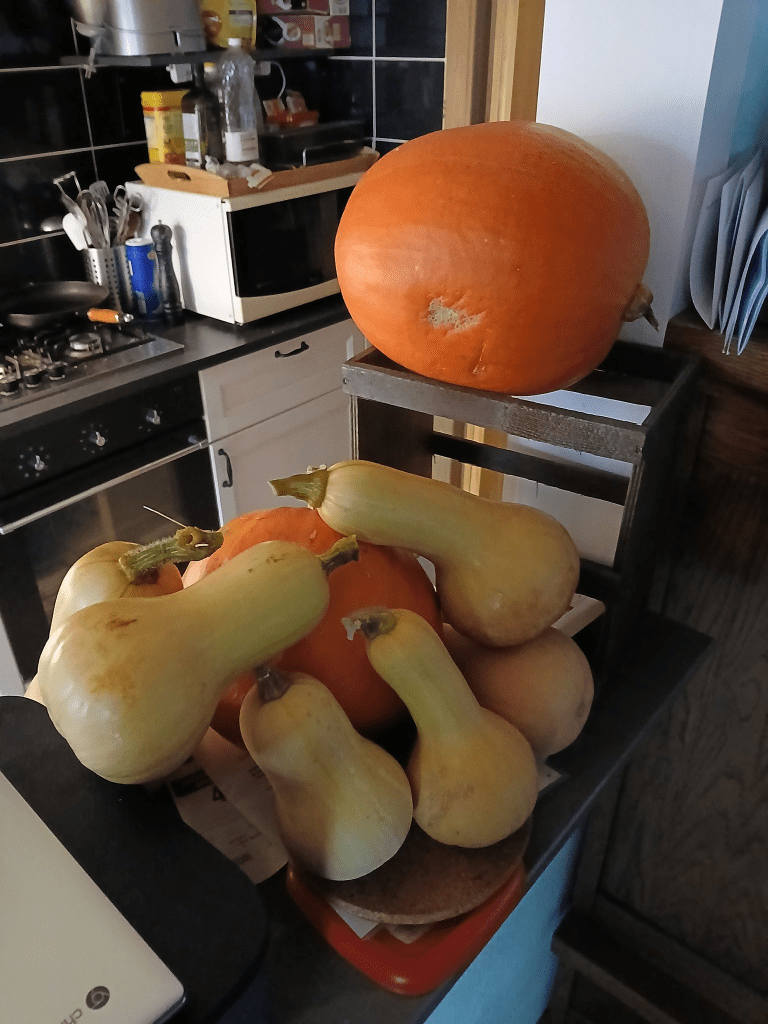
My pumpkin/butternut pile started to grow and was rather impressive to look at.
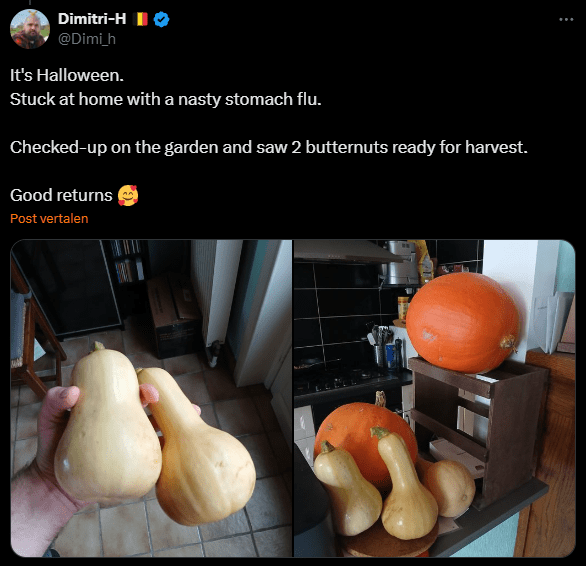
Year 2 – November-December – Butternut and pumpkin pile. Chicory doesn’t disappoint!
Early November proved to be a quite bountiful harvesting month.
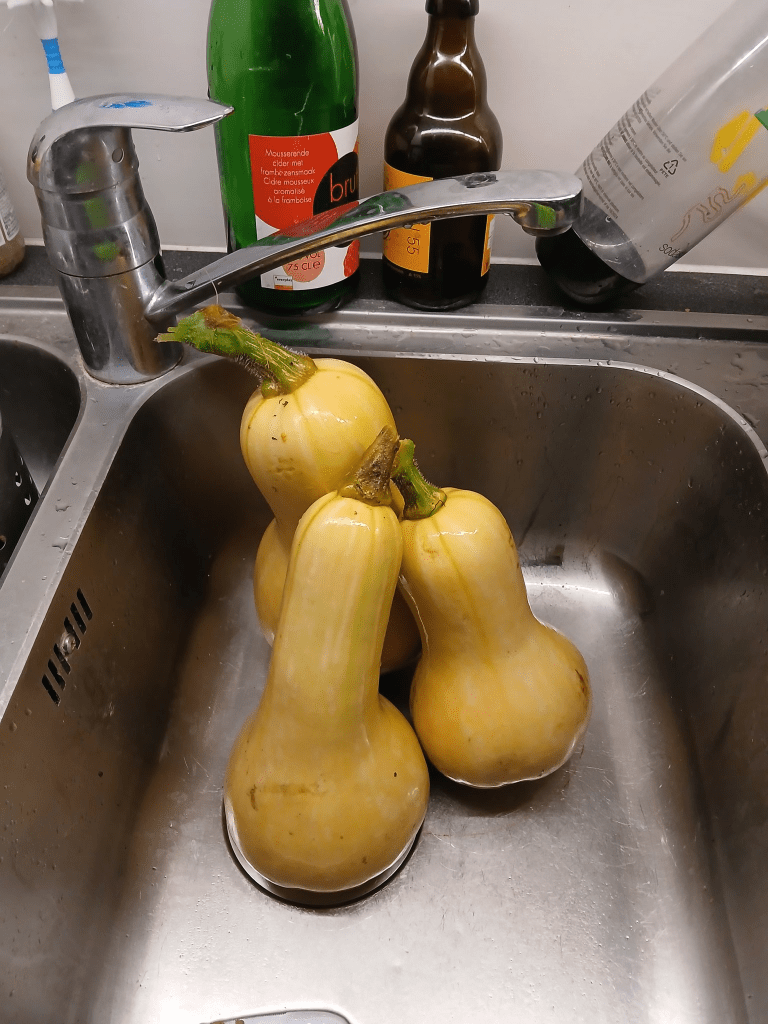
Where I first thought that the harvests made in October were great, November surprised me even more in the sheer amount of butternuts I added to the butternut and pumpkin pile. While the other vegetables were a bit disappointing in size and number did the amount of butternuts and pumpkins make up for it. I had to conclude that 2024 was a great year for Zucchini’s, pumpkins and butternuts.
Trying my hand at chicory now proved to be fruitful (I didn’t have to do much).
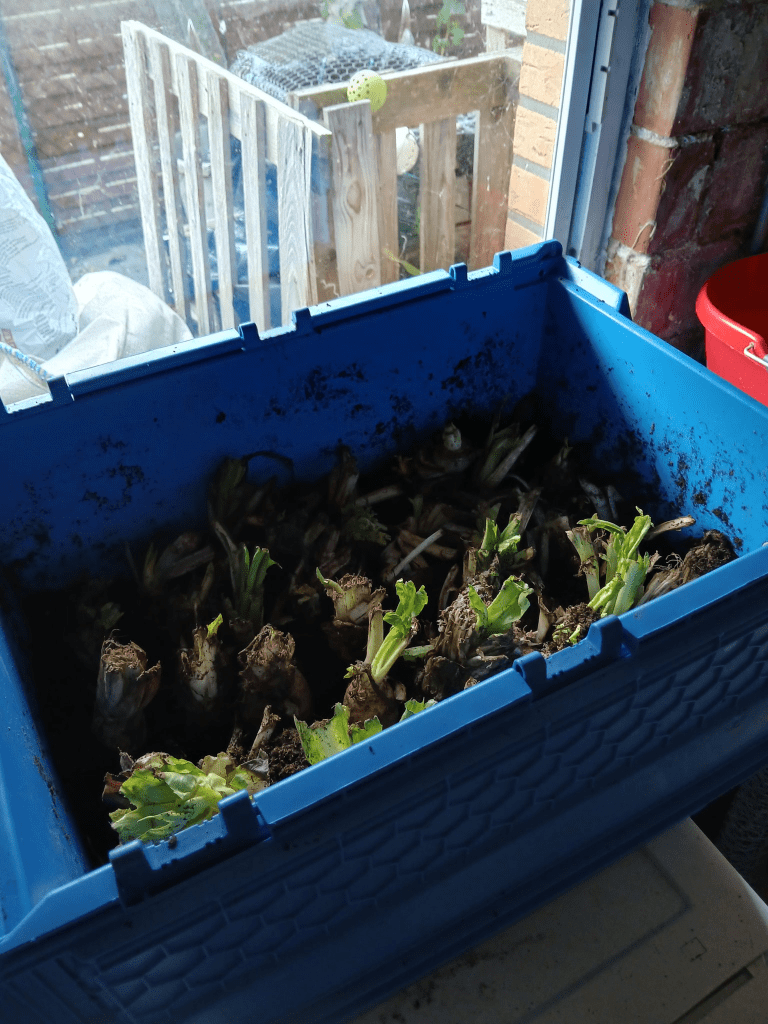
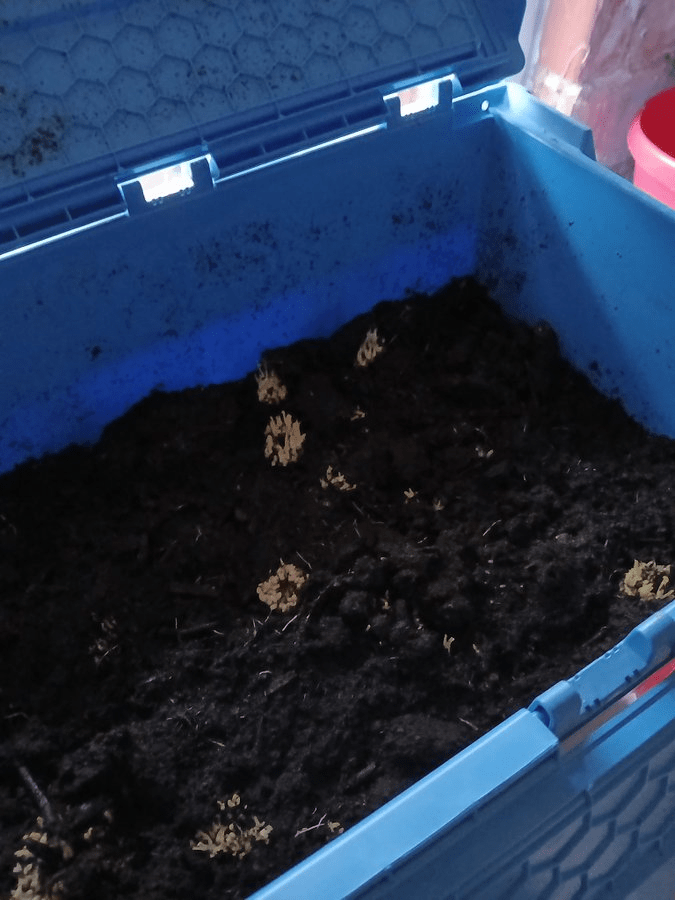
In mid-november could I see various small sprouts sticking out of the soil and going by the size and speed of growth did I guess the harvest would be for December.
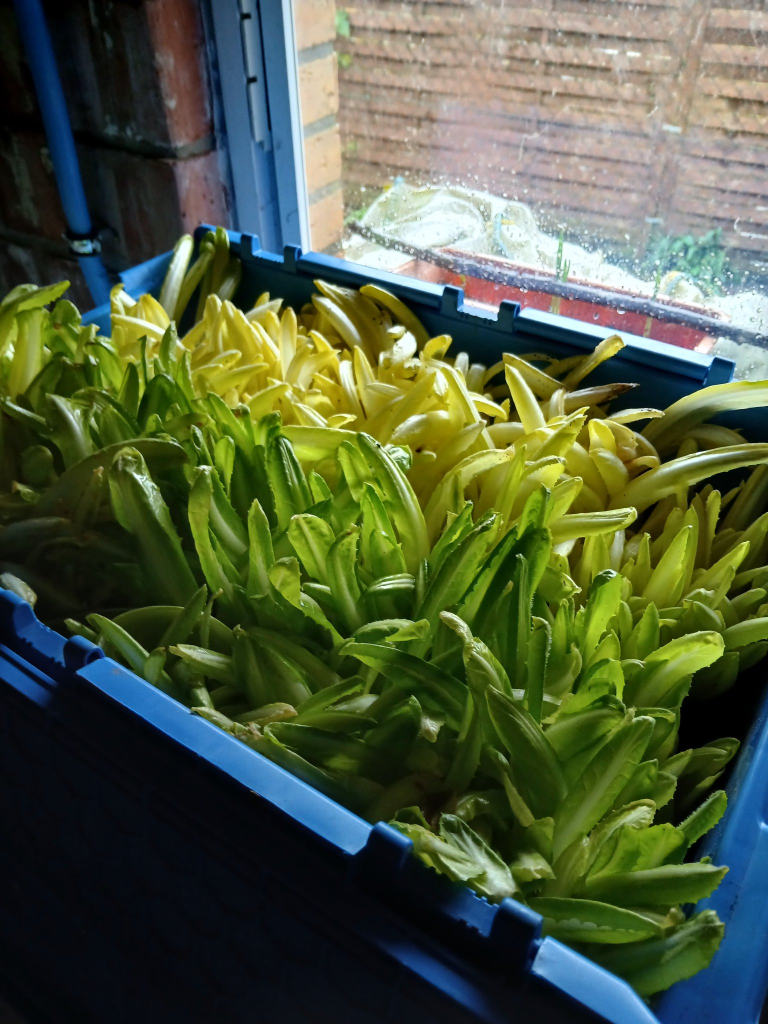
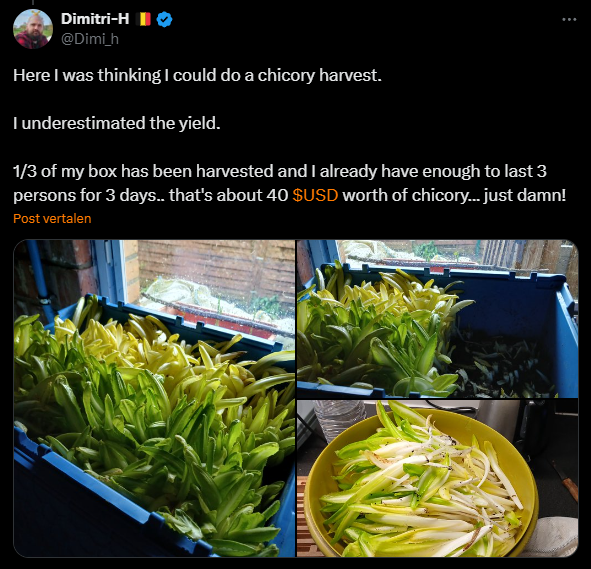
I would not be mistaken but SEVERELY underestimated the amount I’d be harvesting.
Also came to light a mistake I made when planting the roots in their designated “dark room”.
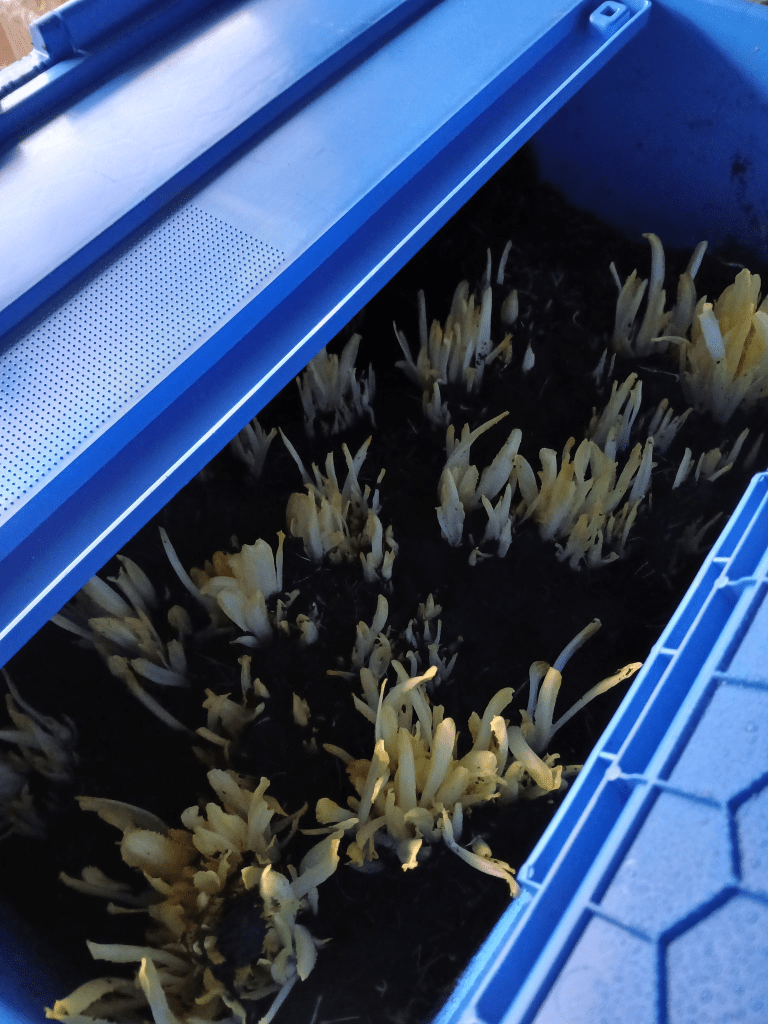
When prepping the roots I cut off a tad too much of the root top. The result was not a nice thick chicory bulb but instead the leaves growing more wildly into longer more slender “bulbs” per root.
Still edible, still fine, just less visually appealing from what you’re used to.
Additionally, as the chicory was growing did I notice I had topped up the growing box a tad too high.
The chicory partially pushed open the box where through sunlight could reach part of the plants.
The result? As could be seen below in the growing stages pictures. Part of the chicory was more green in color (and a tad more bitter in taste). It’s not toxic.. but these chicory leaves were best made into a soup or in a recipe where you can counter the bitterness with a sauce.
Here is the growth of the chicory ranging from November 1st up to December 5th when first harvest took place.
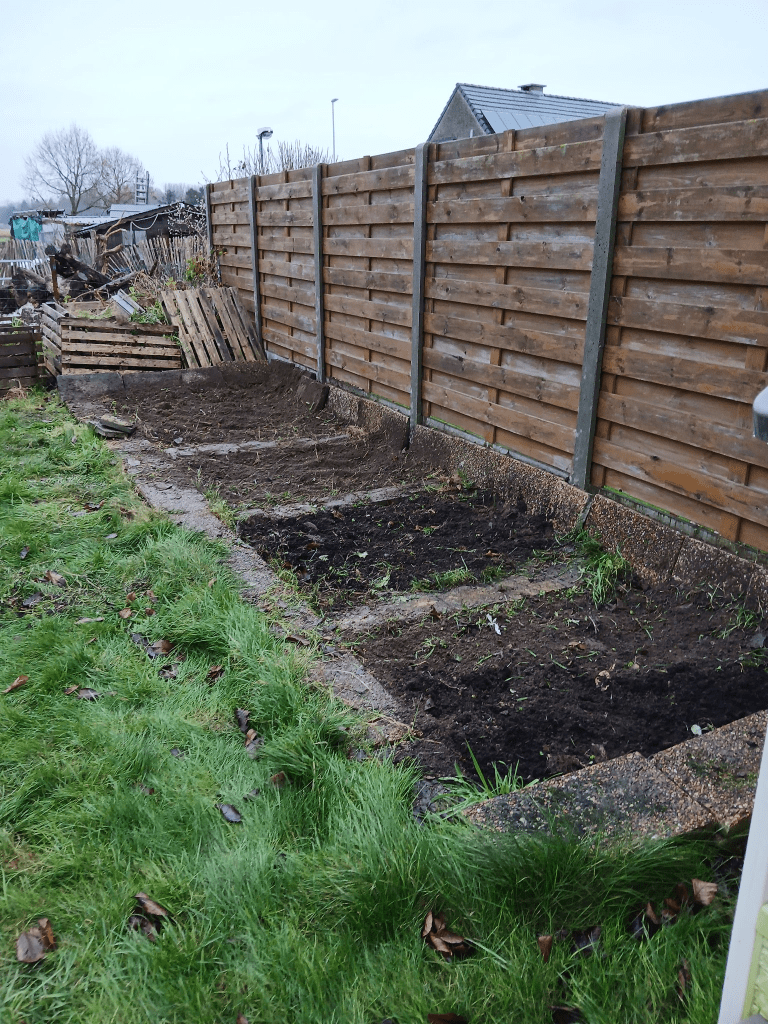
As most of the harvest is now focused on the chircory being grown indoors, the outdoors needed prep. for winter.
I made plans on which plants to grow in 2025.
Decided to enlarge the beds as I wanted to diversify the amount of veggies (and mostly create a dedicated pumpkin/butternut patch).
I cleaned out the beds and used a cultivator to till the soil.
Tilling of the soil happened a few times in December to have the oncoming “freeze” kill all weeds and remaining roots.
Regularly checked up on how the garlic (Elephant and whire garlic) was growing.
And thus concludes the home farming year of 2024.
Lessons learned:
- Enrich and frequently till the soil when weeds are growing.
–> helps preventing loss of nutrients while protecting the main plants - Add additional nutrient rich soil for potatoes and onions so that they have enough space and nutrients to grow to optimal size. (Still playing around on how much I should add, 2025 will be a potato-trial year with enriched soil).
- Garlic needs SPACE to grow. I had multiple bulbs but they were small still. Current spacing might suffice. Will have to continue experimenting in 2025.
- Pumpkin, butternut and zucchini’s are easy to grow… but need constant monitoring as they crawl wildly. Shoots need to be cut-off on a regular basis in order to motivate the plant to grow its fruits in size. You also need space if you want to grow multiple ones. Hence the reason for a dedicated patch.
 Bit-Block.org