A lot of negative press is being shared when it comes down to Bitcoin mining.
The often cited study from Cambridge has been going viral ever since its writing but also has been debunked several times to the extend that Cambridge had to admit they were using non-complete datasets and had to revisit their numbers and models a few times.
Yet, it remains “proof” to the hardcore deniers and opponents of Bitcoin in order to undermine the innovation and market it has brought forth.
But in this entry, I do not want to talk about the global energy mixes nor discuss the “correctness” of the studies made. In this entry, I want to talk about increasing yield from mining.
That is to say, I want to talk about reducing overall costs related to mining and how to more efficiently offset costs in order to get a reduced cost per Hash. To effectively lower needed “security-budget” while maintaining a same output.
In my course on Crypto-mining I highlight the importance of doing profitability calculations.
The importance of measuring the costs of mining vs the profit that can be made. Mining Bitcoin is a balance of being dedicated to help support the network and getting a net positive out of it for your efforts. Mining Bitcoin comes with an energy-cost (as your miners use electricity).
This results in the very easy sum that PROFIT made is the sum of all BTC you have earned through mining minus all costs related to mining ( PROFIT = BTC earned – MiningCosts).
As it stands, many miners will do maximal effort to increase their BTC earned and decrease MiningCosts. This results in a move for innovation to make better performing miners (high hashrates) with lower energy demands. It also results in miners seeking the most stable and low-cost energy sources.. meaning going fully renewable is a valid option.
Another valid option, which I will be focusing on today, has to do with giving BTC miners secondary purposes next to mining. As highlighted in a previous entry on the website (A CASE STUDY: RENEWABLE BITCOIN MINING AS HOME SOLUTION FOR GREENHOUSE FARMING) do Bitcoin miners produce heat as “waste energy”.
In big Bitcoin mining farms is the produced heat from the miners generally evacuated outside of the building through ventilation systems. But heat can be used creatively in order to offset costs elsewhere, freeing up budget and increasing an entire operations finance at overall.
Let’s give a few real life examples and the improvements that it brought forth.
Bitcoin mining Tulips
The first example has been shared by @DocumentingBTC on X.
It shows a video of a Bitcoin mining setup which helps heat up a greenhouse where Tulips are being farmed. As highlighted in this article is the overall costs of deploying the servers fully negated in thanks to the solar panels on the greenhouse providing electricity. This means that profitability-wise, all BTC mined is almost pure profit. Global costs are further reduced for the farmer as the produced heat helps offsetting the heating costs in climatisation. For the farming company, this results in a net-positive as the cost of producing the tulips decreases and more profit can be made selling the tulips.
Farmers loving Bitcoin mining for farming and household chores.
It seems that farmers embrace innovation and have the necessary creative minds in order make full use of secondary use of the miners.
In these posts made by @HodlRev we see creative use of a singular Bitcoin miner to:
- Portable space heater
- lamb incubator
- food dehydrator
- excess solar power hashing (grid stabilisator)
- as heating element in a dryer
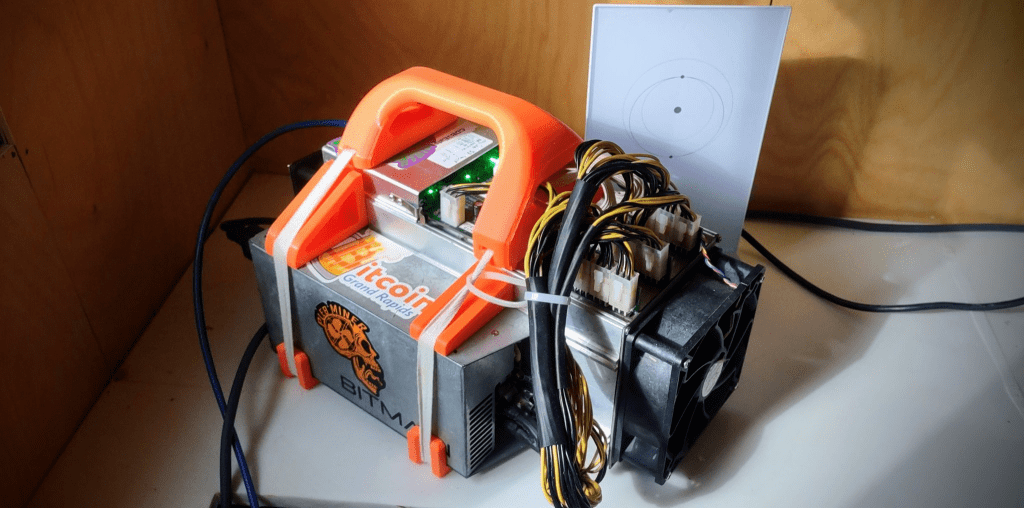
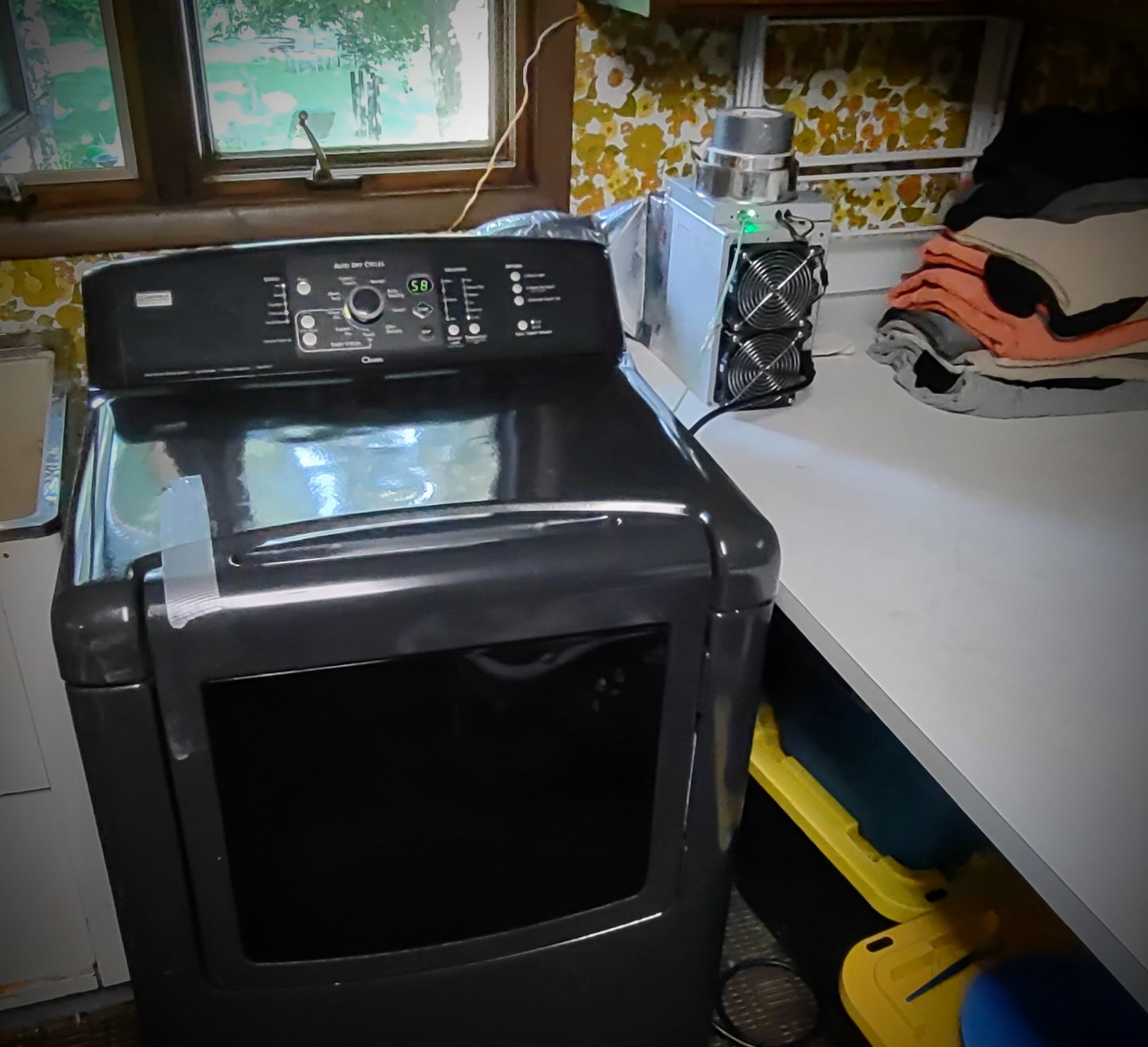
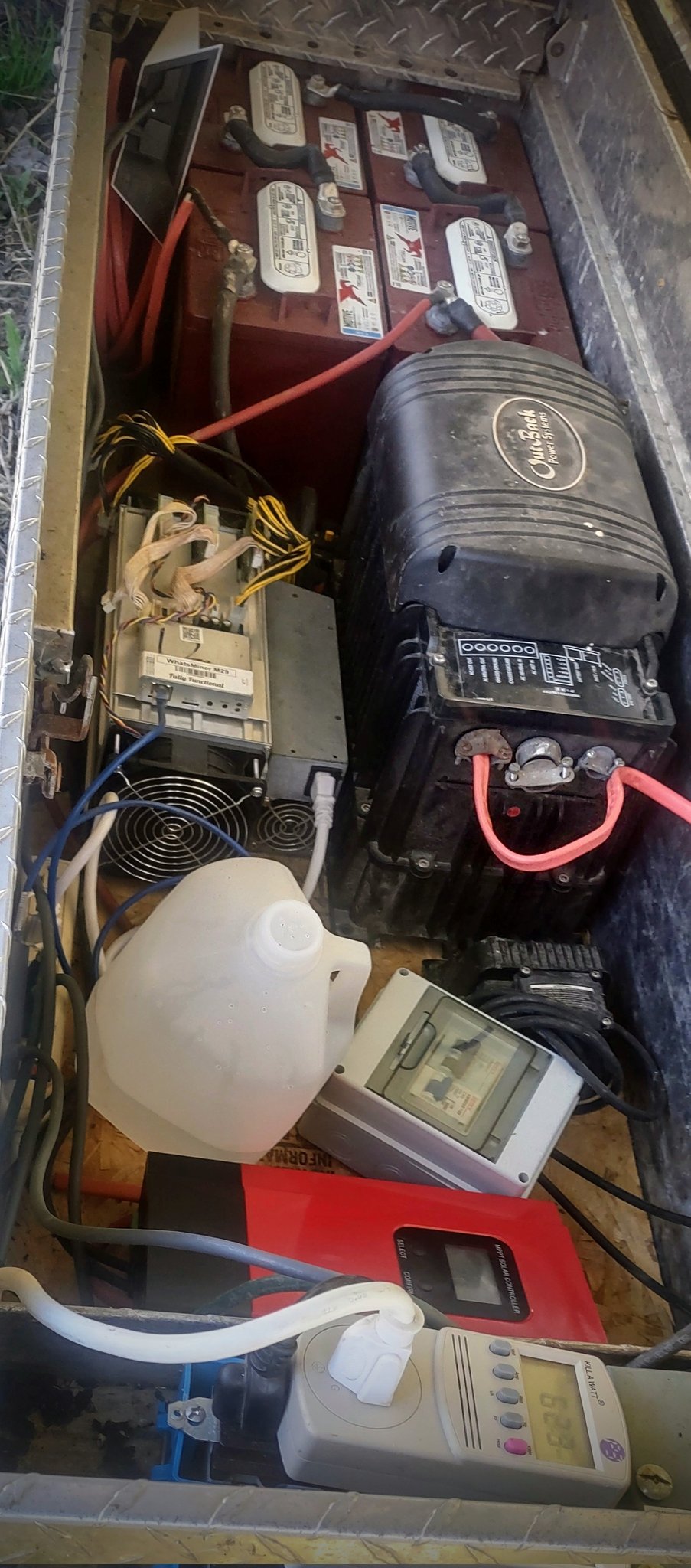
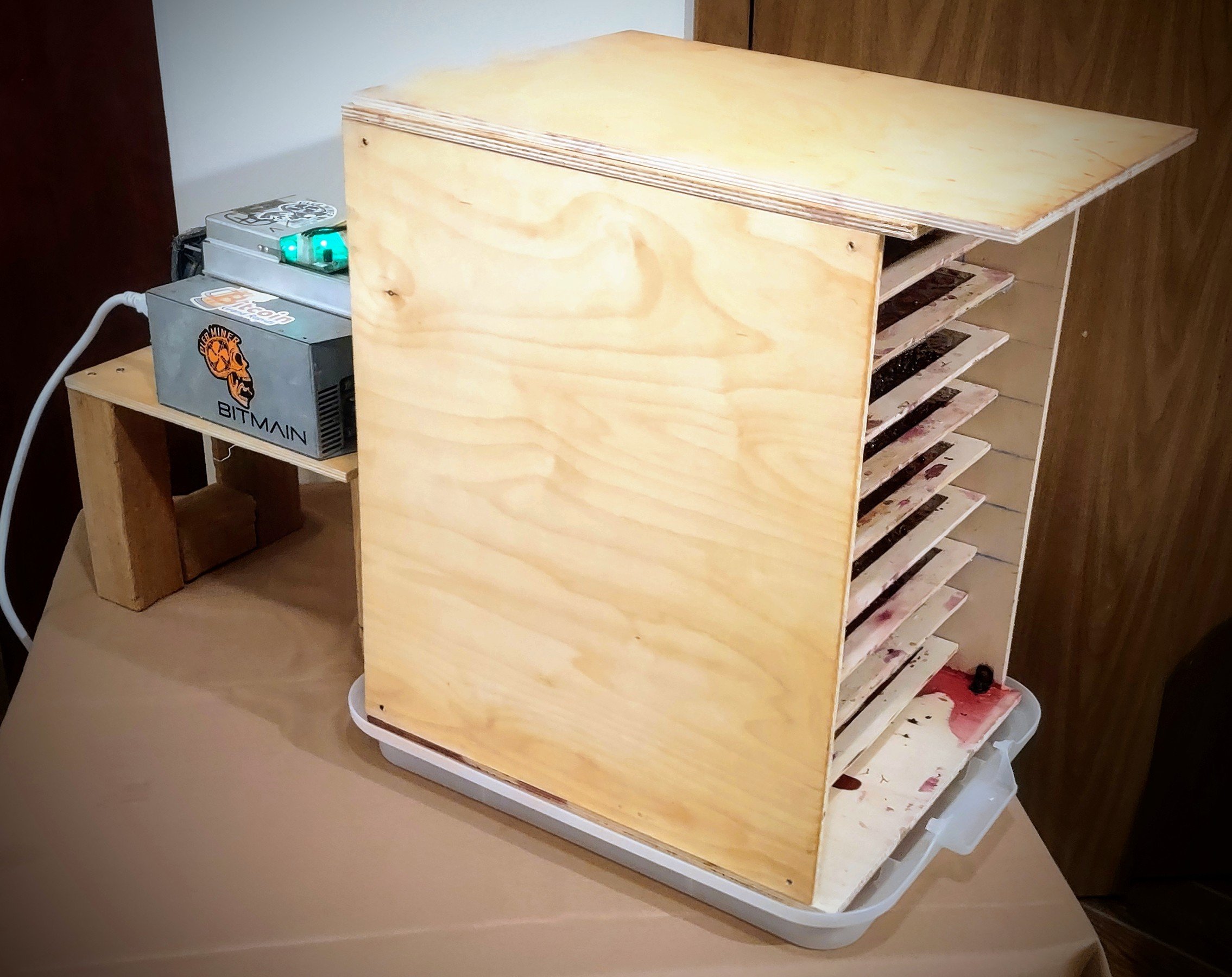
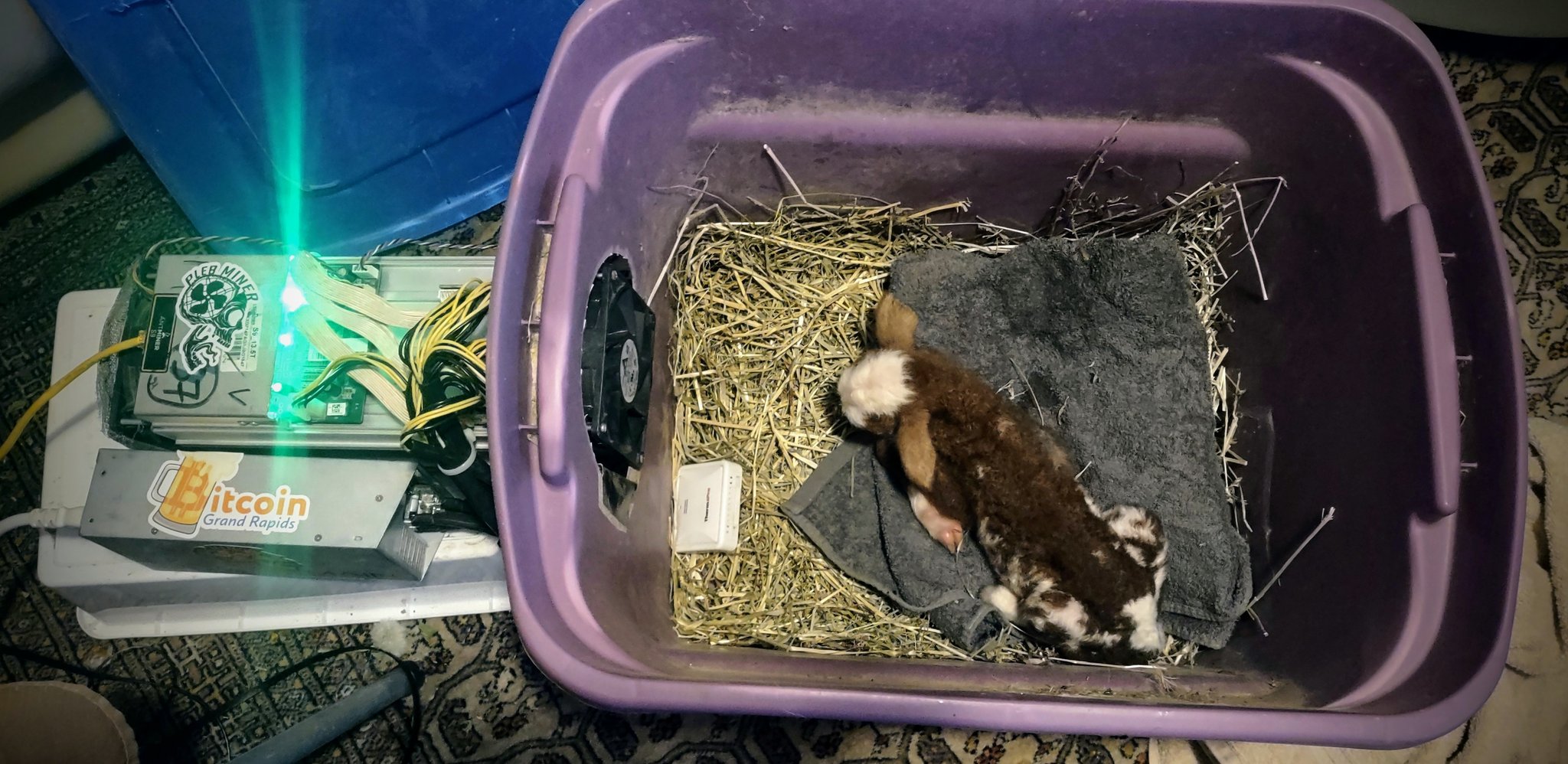
The big advantages? Much like the case-study I made, and the previously mentioned tulip-farming, is it all about offsetting costs. The generated heat is being used efficiently to reduce costs elsewhere. It creates a net-positive while at the same time “money” is being printed through Bitcoin mining. In this example (space heater, food dehydrator, Lamb incubator,..) is the Bitcoin miner a stand-in for other expensive technology that come with their own costs. It highlights an efficient use for, and of, the miner. How high tech can reduce costs and become much more cost-efficient by using it as a secondary means in low tech.
Bitcoin mining… pools?
In the following example we see a somewhat more luxurious secondary use of Bitcoin mining.
In this little tweet made by @Crypto_Nic0 we see a setup of a Bitcoin miner being made to heat-up a swimming pool (or at the very least pre-warm the water a little).
As mentioned in the follow-up tweet is it a far from ideal setup and, currently, is the desired effect not fully reached though “The fun part of prototyping is you get to try stuff, push your concept to the limit….” which is exactly what many innovative miners aim for.
Should his setup work (and I do believe it is possible through scaling the amount of miners and making use of a buffer-tank) would this effectively mean a reduction of heating costs on his swimming pool by no longer needing separate tech (and its specific costs) to heat up the pool.
Bitcoin mining as grid stabilization.
Plenty of examples and articles exist whereby Bitcoin mining is being used as a grid stabilization.
Even the previously mentioned example of @HodlRev showed us that his Bitcoin miner helped stabilize the energy output by the solar panels on his farm.
In this example, as shared by @DSBatten, we see how Bitcoin mining in Africa can help stabilize the rural energy problems. How it can help stabilize local grids by playing with the hash-outputs of the miners to free up energy that can be injected onto the electricity grid (or be upscaled in case of overproduction and avoid black-outs). Full article can be found here.
Bitcoin mining.. in the heat?
In this example made by @altair_tech we learn the increasing importance of dual purpose mining whereby the miner itself is being used as heat source to heat up a room (or even house).
Dual purpose mining where the miner is being used as a heater is something quite convenient that will help reduce heating costs in your home. By making use of the waste energy produced by the miner (heat) are you offsetting costs made by other technologies which were specifically designed for that purpose. Let’s not forget that having a secondary use for mining is all about increasing efficiency of the system and increasing profit as much as we can… not only by reducing mining costs but also by reducing others costs at overall as well.
Referring back to the case-study I made, about 10% – 40% of the power used by a miner is changed into heat. That percentage is quite interesting if we take that an average miner uses about 3.25 kW/h in energy. 10% (or 325W) is suitable to heat up a space of 6m2. 40% (or about 1300W) is sufficient enough to heat-up a bathroom to “cosy” levels with a total surface area of +10m2.
This means a tremendous impact of energy reduction where it concerns heating in your home.
In a sense can it be stated that you are getting paid to heat your home.
In conclusion
Innovation is ongoing for Bitcoin where it concerns mining.
This is not limited to creating more powerful and efficient miners but also in finding secondary uses with the miners themselves as well as upcycling the “waste” they produce to offset costs elsewhere.
Bitcoin mining, on both individual as well as corporate business level, can provide to be an asset in rentability and increased profit by secondary use which can offset costs not related to mining.
Just like making use of waste energy (like flaring) to produce cheap electricity (to mine Bitcoin) which results in a more efficient system will secondary use of Bitcoin mining result in a net positive by offsetting costs elsewhere. It can be said that dual-purpose Bitcoin mining (mining Bitcoin and having secondary use) holds the key to a more sustainable network as well as make mining so much more attractive to retail.
 Bit-Block.org
Leave a reply to Review: The Bitaxe Ultra (1366) – Gracious Interests Cancel reply